
- Natural stone carved walls work especially well in three places: the living room (sofa or TV wall), the staircase (seen from every level) and the pooja room.
- Sandstone and marble are the most common carving stones; limestone and travertine suit softer texture; granite is mainly for flat or exterior cladding.
- Most carved panels are CNC-roughed and hand-finished.
- Plan lighting, backlighting, inlay and fixings before carving starts.
- Porous stones should be sealed; clean with pH-neutral products only.
- For a quote, send the design name, wall width × height, city and a site photo to WhatsApp +91 99826 66712.
What is a natural stone carved wall?
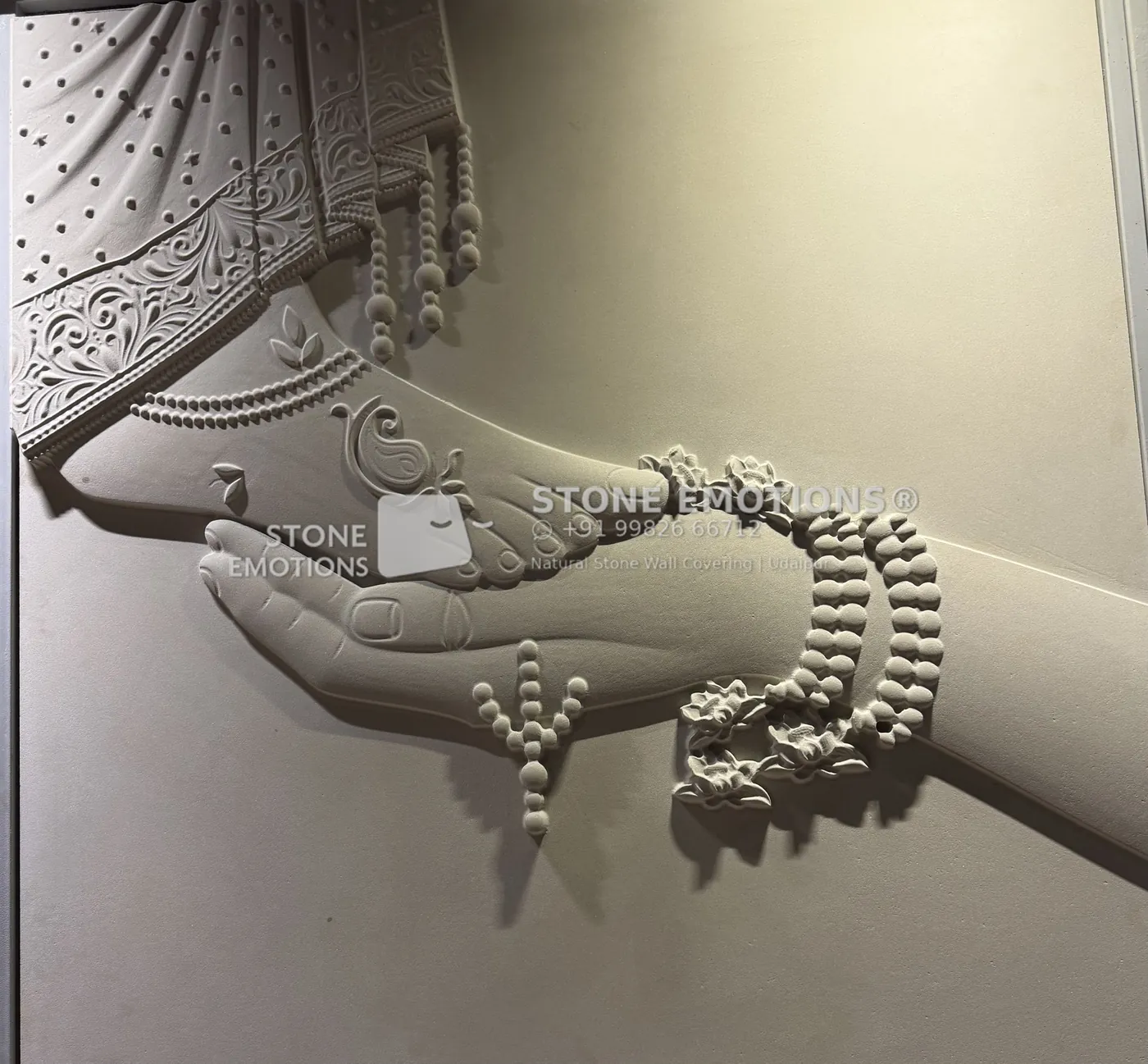
A natural stone carved wall is a wall clad in real quarried stone — usually sandstone, marble or limestone — whose surface is carved in relief into motifs such as leaves, lotus, birds, deities or geometric patterns. Unlike moulded or printed panels, each piece carries the stone's own grain and colour variation, and the carving casts real shadows.
Carving depth ranges from shallow line work that reads as texture to deep relief murals. For material and finish options, see our natural stone wall cladding page and the wall cladding guide. The ideas below are grouped by space.
Which natural stone wall designs suit a living room?
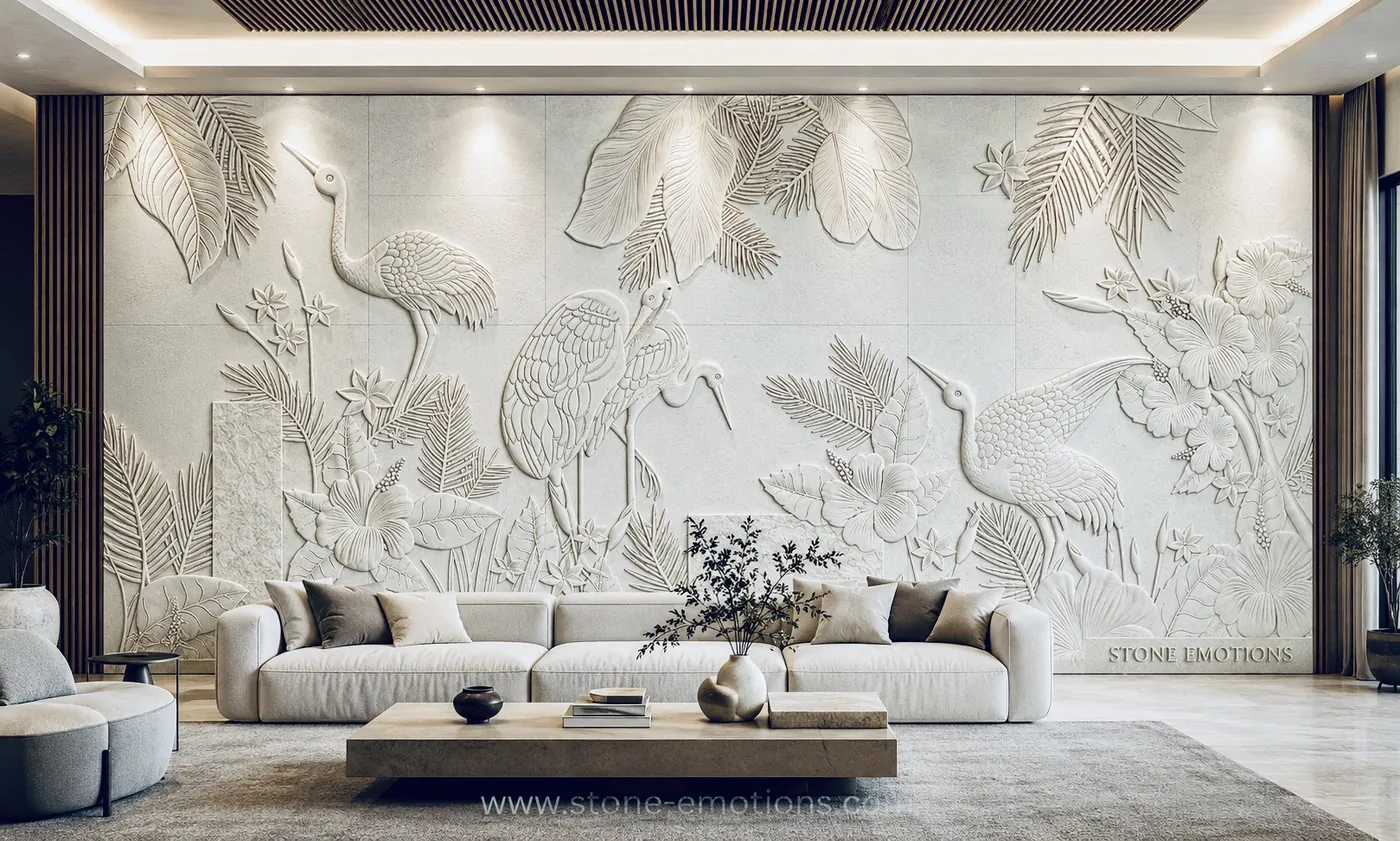
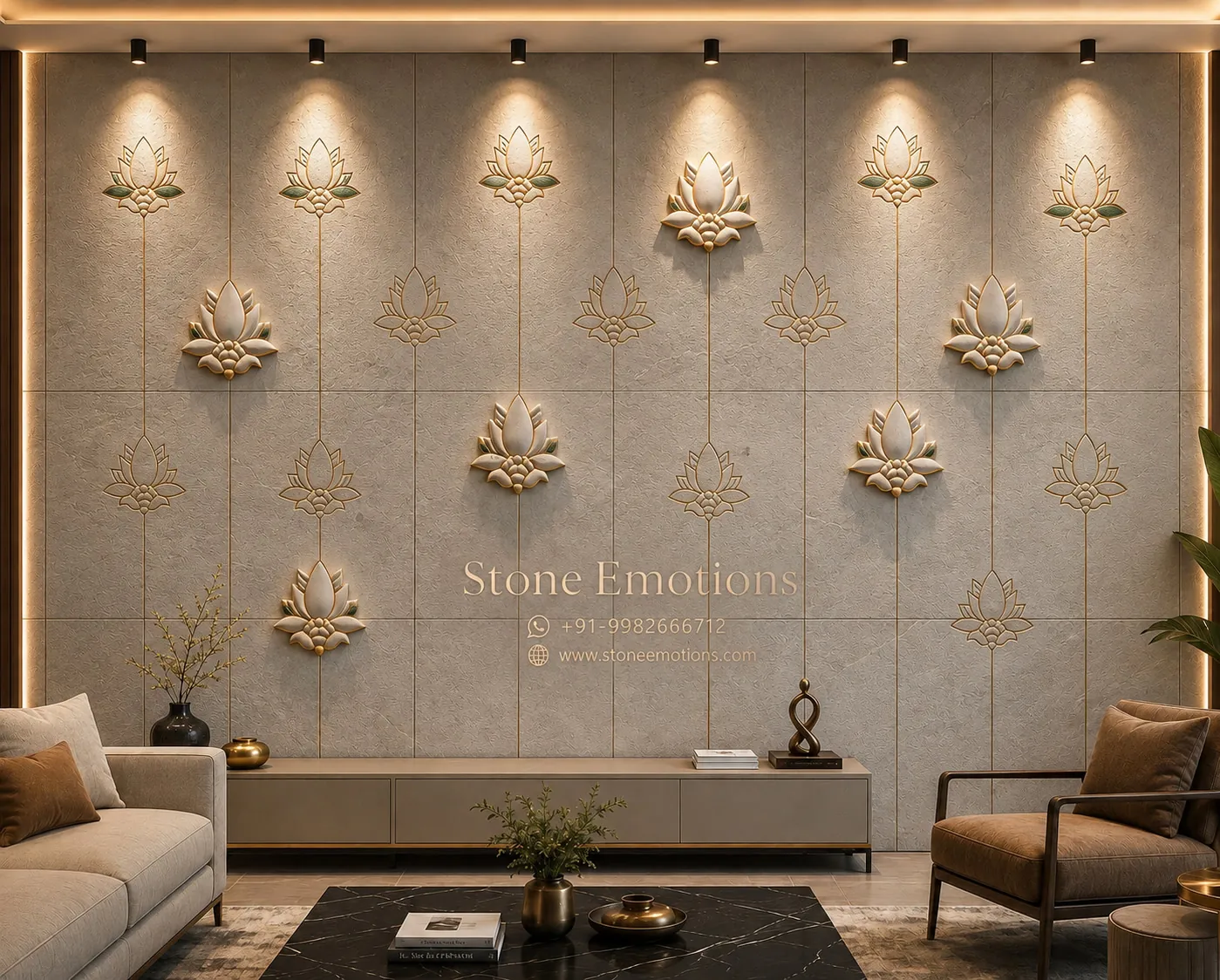
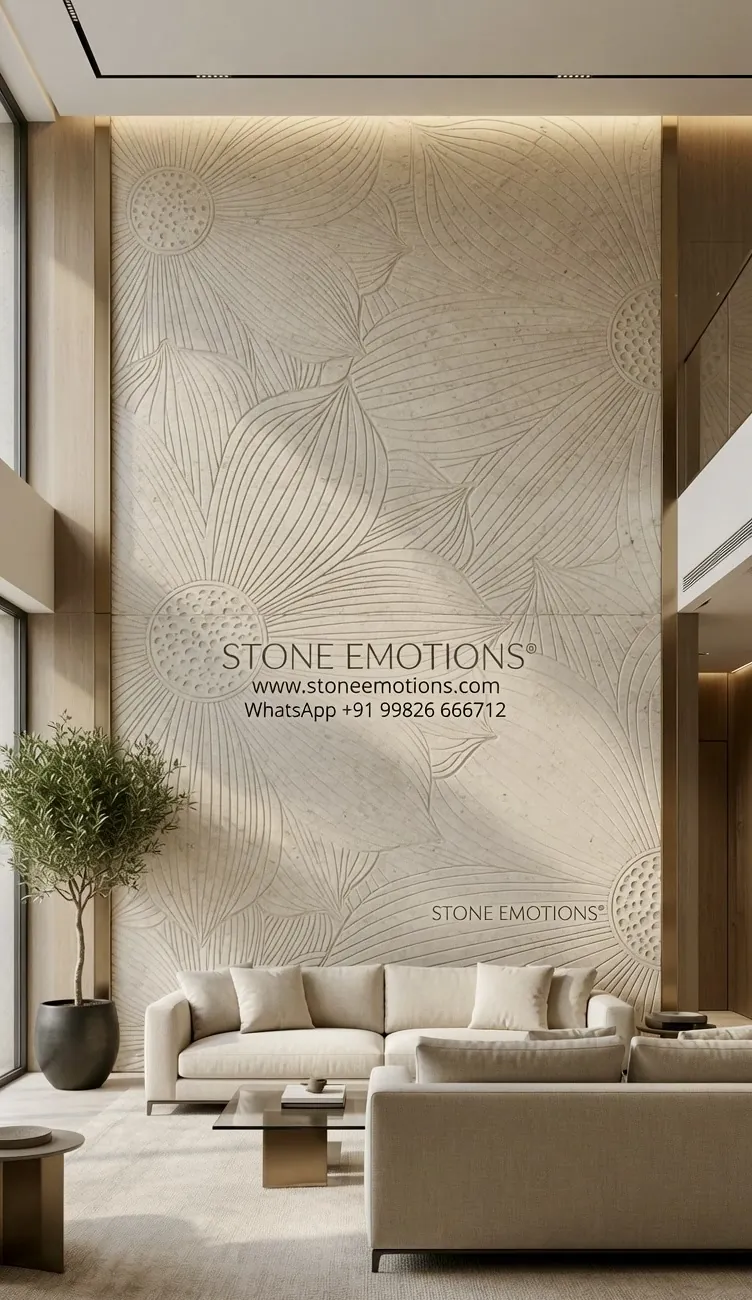
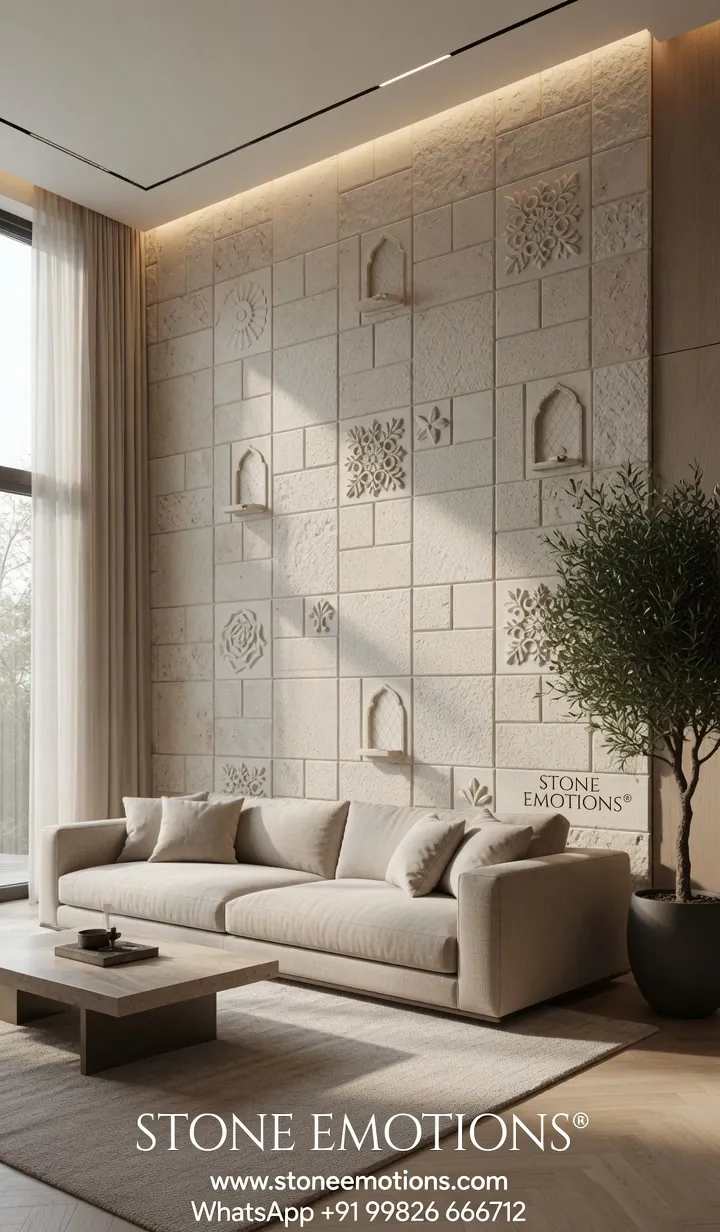
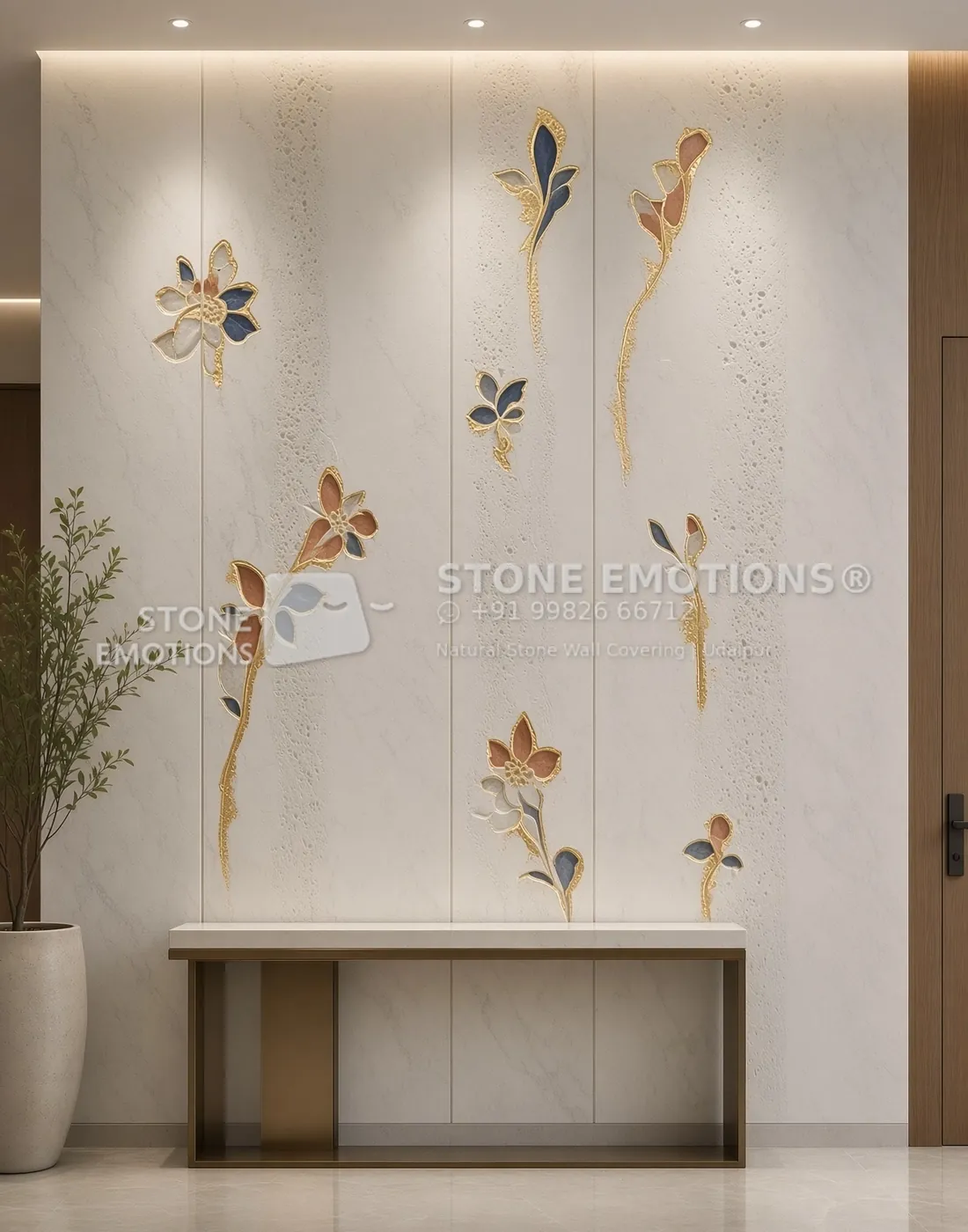
Living rooms suit one strong feature wall — usually behind the sofa or TV. Nature murals such as cranes, banana leaves or trees give a calm backdrop; lotus grids, inlay flowers and geometric blocks give a more structured look. Keep the TV area simpler so the screen and carving do not compete, and light the relief from above.
See more in our living room wall collection and how to plan a living room stone feature wall.
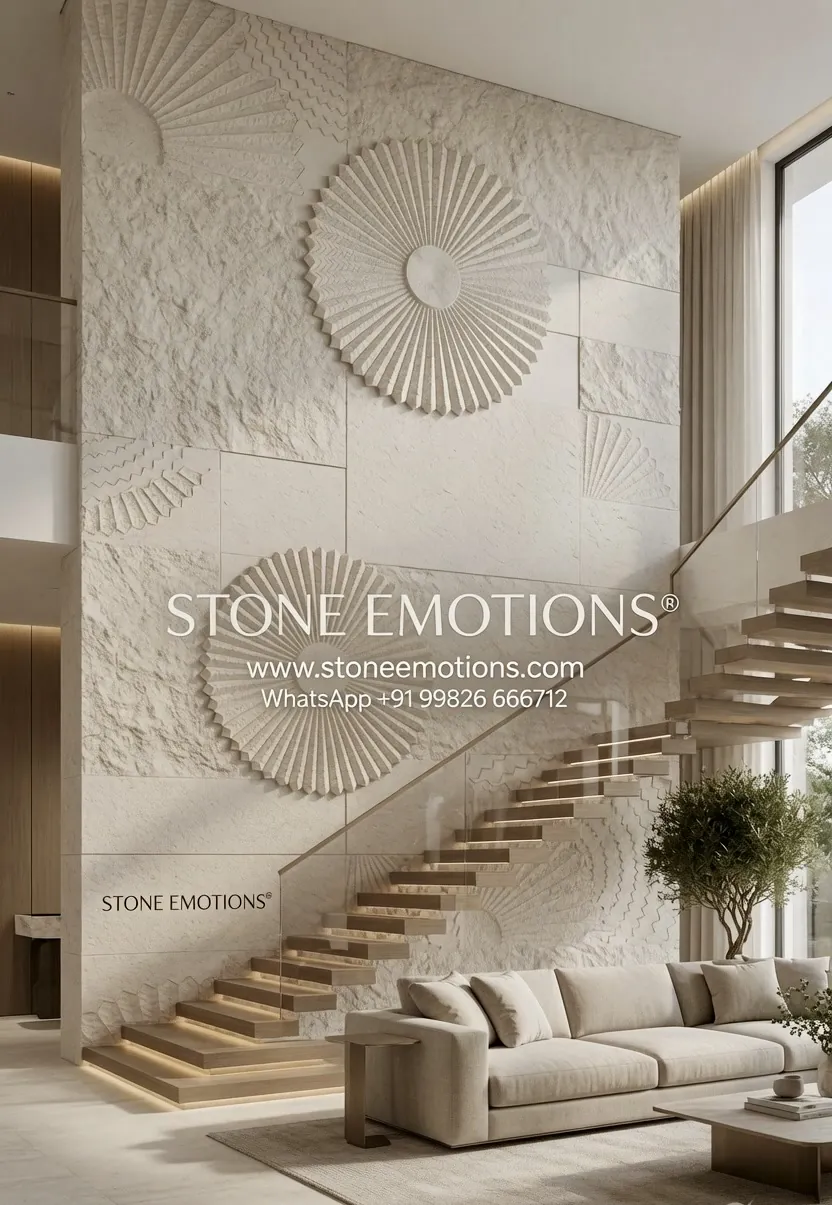
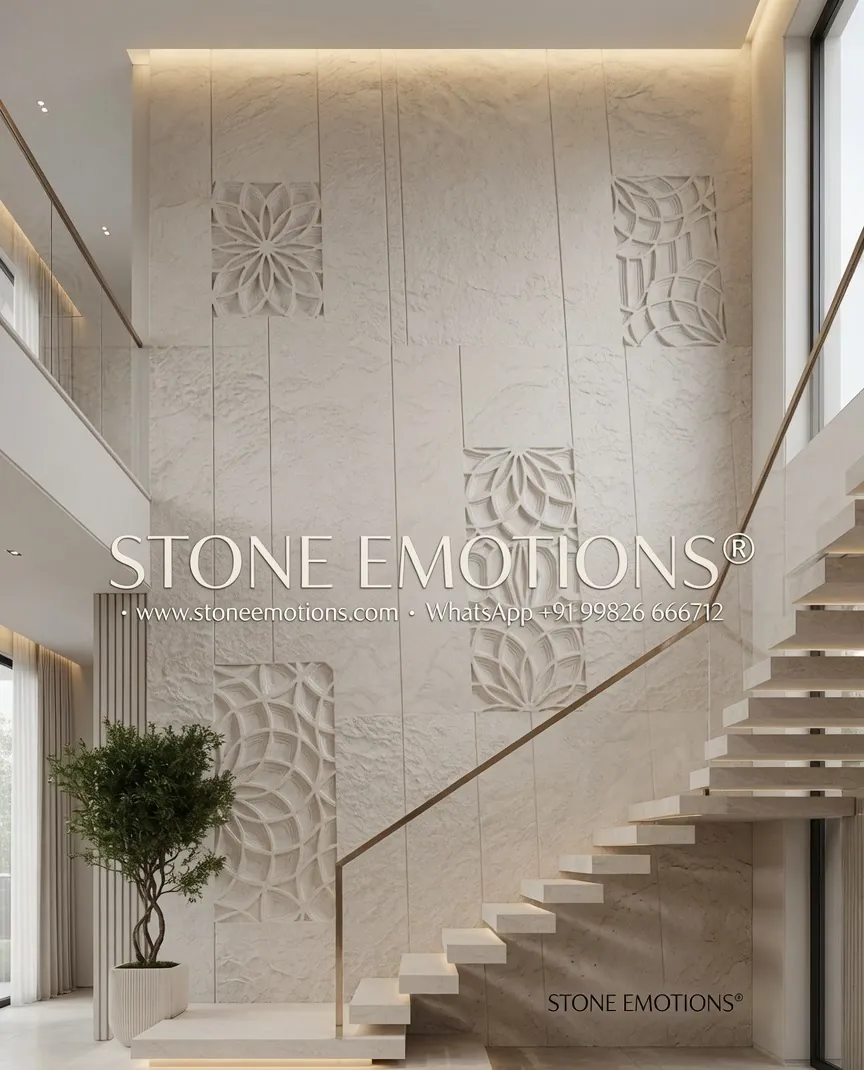
What makes a good natural stone staircase wall?
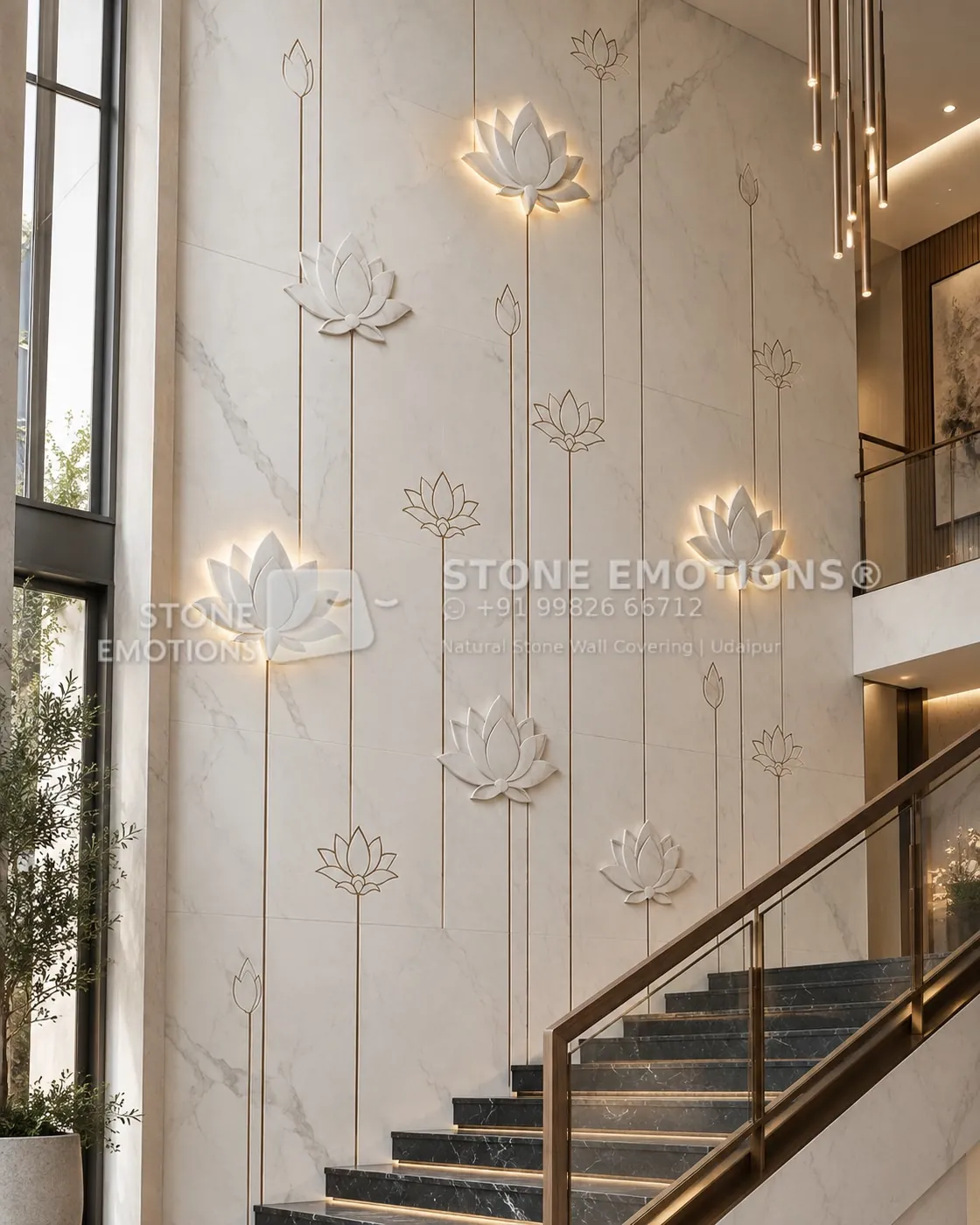
A staircase wall is seen from below, from the stair and from the landing, so it needs a composition that reads at several distances. Rising motifs — lotus stems, a high mandala, carved panels stepping with the stair — use the height well. Panel joints and fixings at height should be planned with the installer before carving.
For more tall-wall ideas visit double-height stone walls and the staircase wall collection; for layout read panel joints on double-height walls.
How do you design a natural stone pooja room wall?
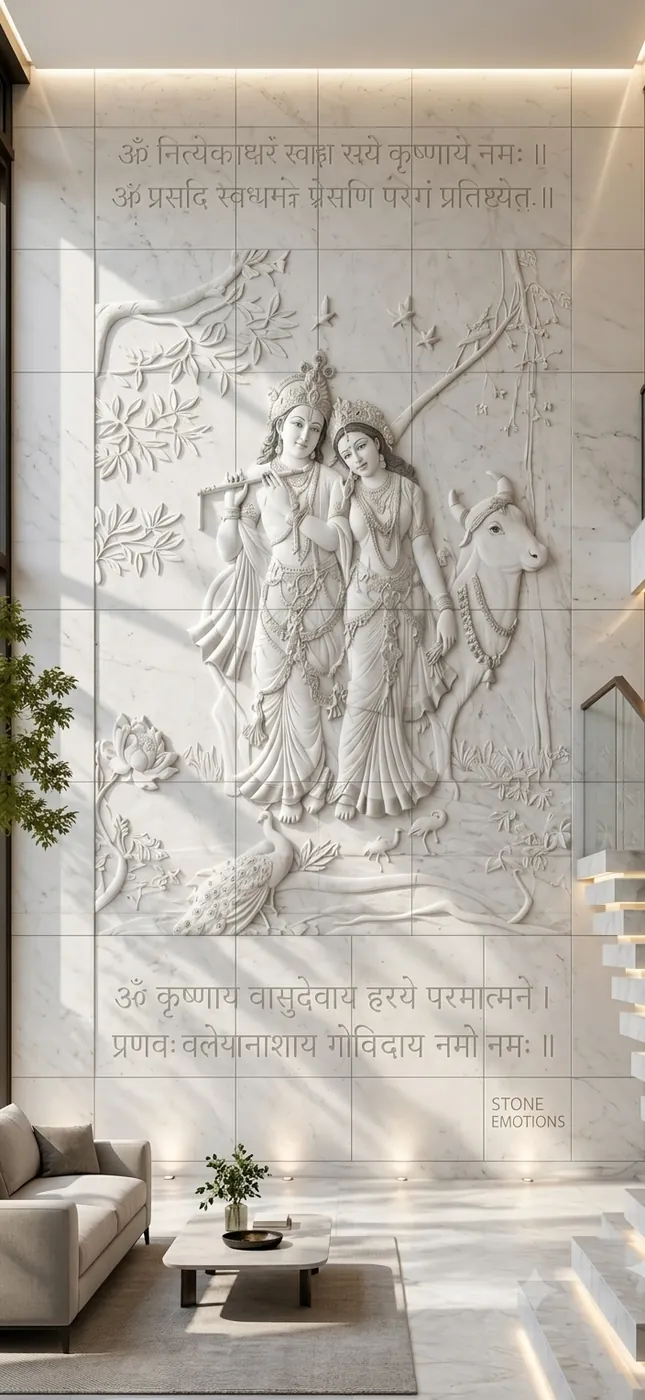
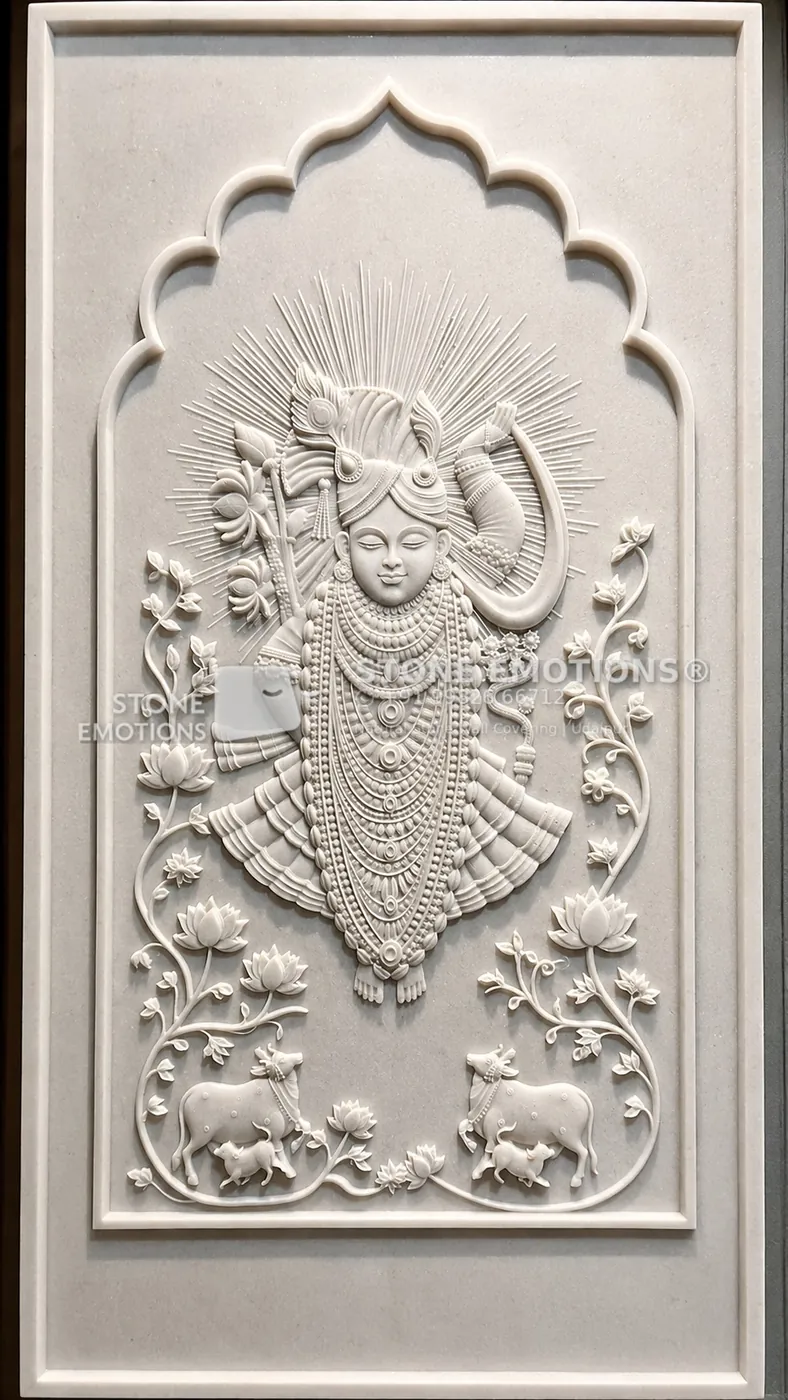
Start with the deity or symbol the family worships, then choose a frame — an arch, a mural with verses, or a focused relief. White marble and fine sandstone are traditional choices. Keep very deep, narrow crevices away from where diyas and incense are used, as soot and oil collect there, and seal the stone.
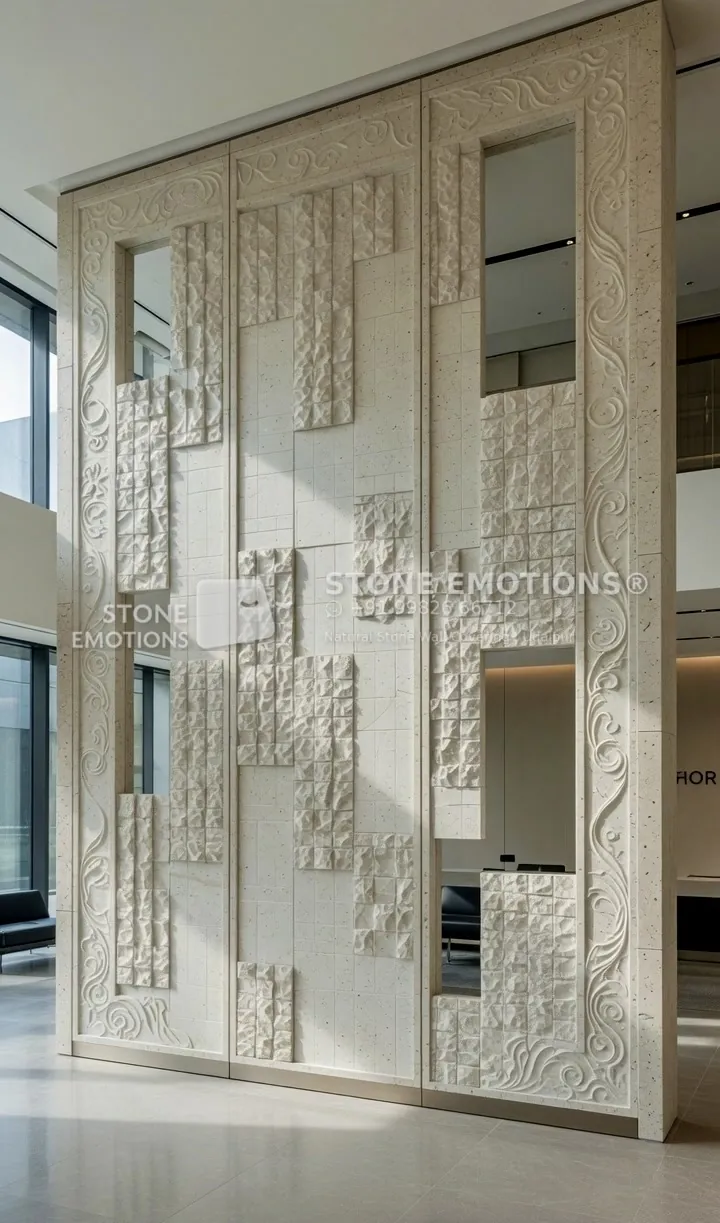
Many families also follow Vastu guidance for the mandir position; we adapt the design to the location you choose. A carved partition screen can mark off a pooja corner from the living area while letting light through. Browse temple backdrops, the mandir and sacred walls collection and how to plan a stone mandir backdrop.
Which natural stone is best for carving?
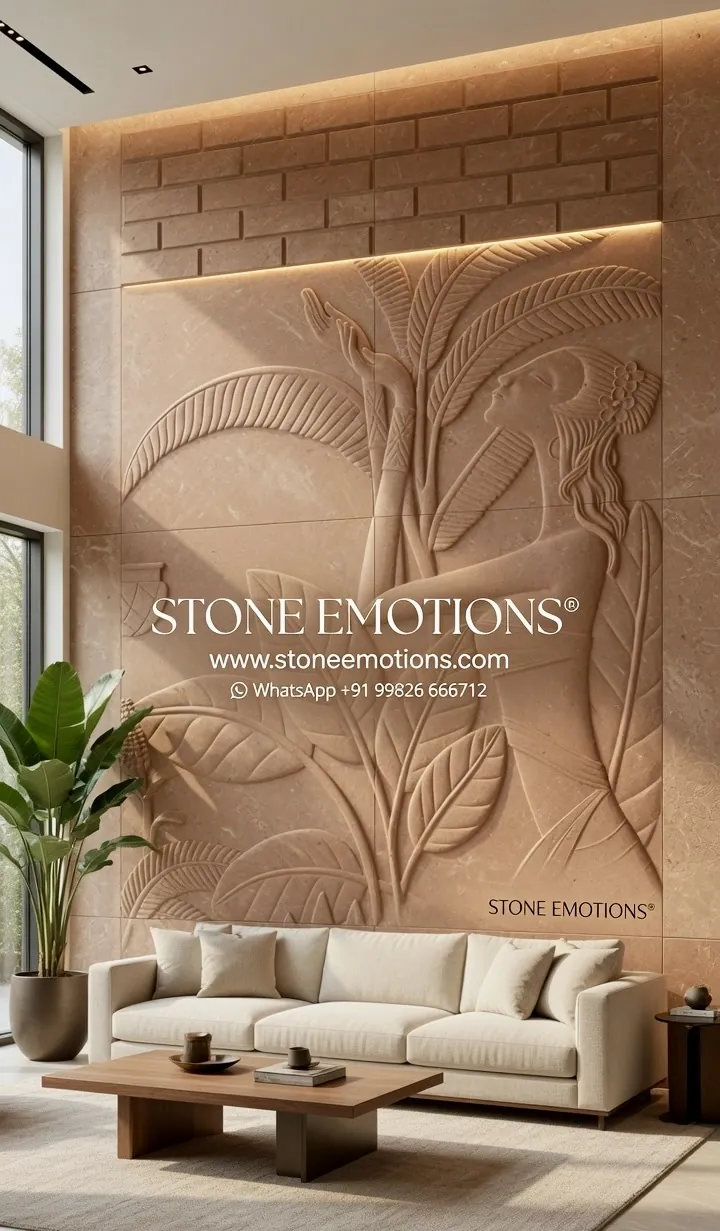
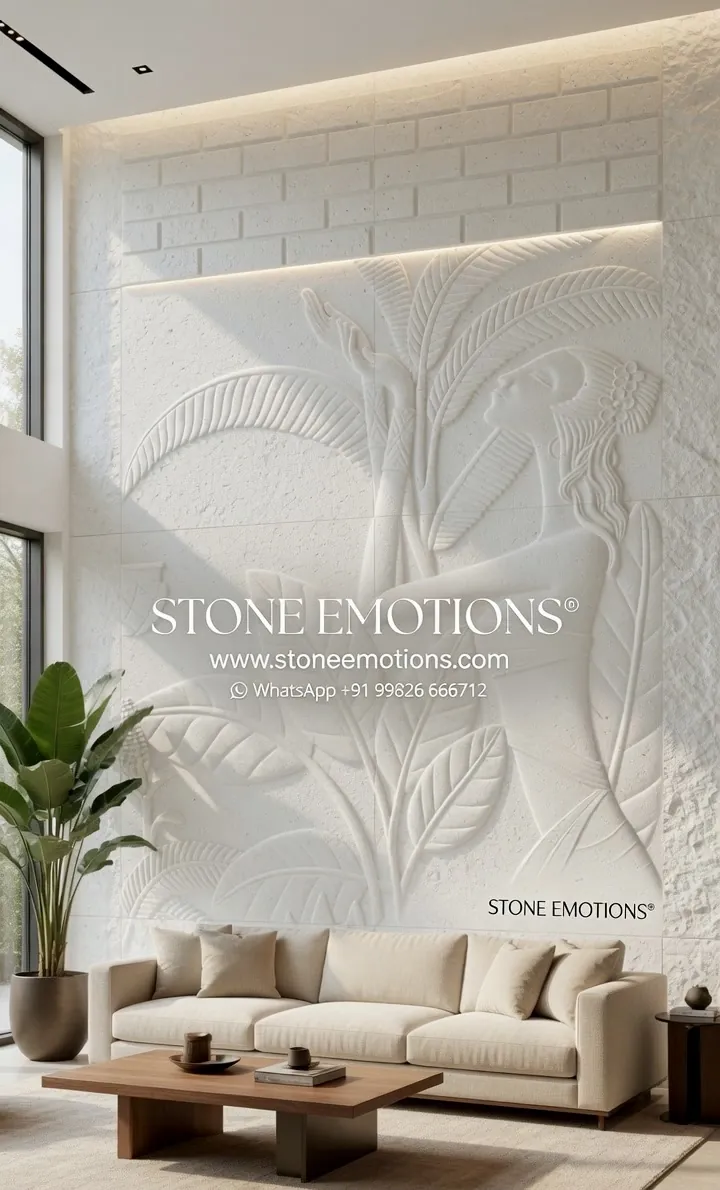
Fine-grained sandstone and marble are the most widely used stones for carved walls because they hold crisp detail. Sandstone gives a warm, matte look and suits deep murals; marble suits fine deity work and inlay. Limestone and travertine suit softer texture, while granite is better for flat or exterior cladding than detailed relief.
| Stone | Character | Carving | Typical best use | Care notes |
|---|---|---|---|---|
| Sandstone | Warm, matte, granular; cream, beige, pink, mint tones | Carves well; suits deep relief and murals | Living room murals, staircase walls, temple backdrops, many exteriors | Porous — sealing recommended, especially outdoors and near diyas |
| Marble | Fine crystalline, can be polished; white and coloured | Holds very fine detail | Deity reliefs, pooja panels, inlay work, interiors | Sensitive to acids (lemon, vinegar, harsh cleaners); seal and wipe spills |
| Limestone | Soft, even, muted greys and beiges | Carves easily; good for soft, shallow relief | Quiet textured walls, geometric and line relief, interiors | Porous and acid-sensitive — seal; avoid acidic cleaners |
| Travertine | Natural pores and layered texture | Better for texture and simple patterns than very fine detail | Contemporary feature walls, fluted or textured cladding | Pores may be filled or left open; seal and clean gently |
| Granite / quartzite | Very hard and dense | Harder to carve; suits engraving, texture and flat cladding | Exterior cladding, high-wear areas | Low porosity; very durable |
| Slate | Layered, dark, split-face | Not usually used for figurative relief | Stacked or textured accent walls | Seal if in wet or outdoor areas |
Compare further in sandstone or marble for a carved wall, and see Gwalior sandstone, Mint sandstone murals and our materials library.
CNC carving or hand carving?
CNC carving uses a computer-controlled router to cut the design from a digital file, giving accuracy and repeatability across many panels. Hand carving lets artisans refine edges, faces and fine ornament. At STONE EMOTIONS® we combine both: 3-axis CNC roughs out the relief and artisans hand-finish every panel in our Udaipur facility.
Read the CNC, relief and 3D carving guide, or see custom CNC stone carving and carved stone wall panels.
Can carved natural stone be used outdoors?
Yes, but stone choice matters more outside. Dense, durable sandstones, granite and quartzite are commonly used for exteriors; softer limestones and polished marbles are generally better kept indoors. Outdoor carving should be sealed, detailed so water drains rather than pooling, and fixed mechanically. Every design on this page is shown as an interior wall.
For facades, see our products range and fluted stone panels.
How is a carved stone wall installed?
Carved stone is fixed as numbered panels to a sound, level, dry wall. Depending on weight and height, panels are fixed with stone adhesive, mechanical anchors or clamps, or a combination; tall and heavy walls need mechanical fixing. Joints are placed along natural lines in the design, and the installer confirms the fixing method for the actual wall.
Share a site photo and wall construction details early so the panel layout and fixing can be planned before carving.
How do backlighting and inlay work?
Grazing light from a ceiling cove or spotlights is the simplest way to bring out relief depth. Backlighting — as on the lotus staircase wall — needs selected thin or translucent areas, plus channels, LED access and wiring planned before carving. Inlay sets contrasting stone or gold-toned accents into recesses cut in the base stone.
Read lighting for carved stone relief walls and see Stone Match & lighting.
How do you maintain and seal a natural stone wall?
Dust carved walls with a soft brush or dry microfibre cloth and clean only with water or a pH-neutral stone cleaner. Avoid acids, bleach and abrasive pads, especially on marble and limestone. Porous stones such as sandstone and limestone benefit from a breathable penetrating sealer; reapply as the sealer manufacturer advises.
In pooja rooms, wipe oil and soot marks promptly. Never pressure-wash interior carving.
How to get a quote: what to send
To get an accurate quotation for a natural stone carved wall, send five things on WhatsApp +91 99826 66712: the design name from this page, the wall width × height, the city, a site photo or drawing, and whether you want lighting or inlay. We then advise stone options, layout and a quotation.
- Choose a design — note the design name from this page, or send your own reference
- Measure the wall — width × height, plus any doors, switches or niches
- Photograph the site — a straight-on photo of the wall, and for staircases from the ground floor and landing
- Tell us the city and space — living room, staircase, pooja room or exterior
- Mention extras — lighting, backlighting, inlay or a preferred stone
Message us on WhatsApp: +91 99826 66712.
About STONE EMOTIONS®
STONE EMOTIONS® (Stone Emotions LLP) is a natural stone studio and manufacturer in Udaipur, Rajasthan, India. It designs and produces CNC carved and hand-finished stone wall murals, staircase walls, temple backdrops, jali screens, fluted panels and stone cladding in materials including sandstone, marble, limestone, granite and quartzite. Website: stoneemotions.com · WhatsApp +91 99826 66712 · Our story.
Natural stone wall cladding Collections Gallery Knowledge Center All journal posts