
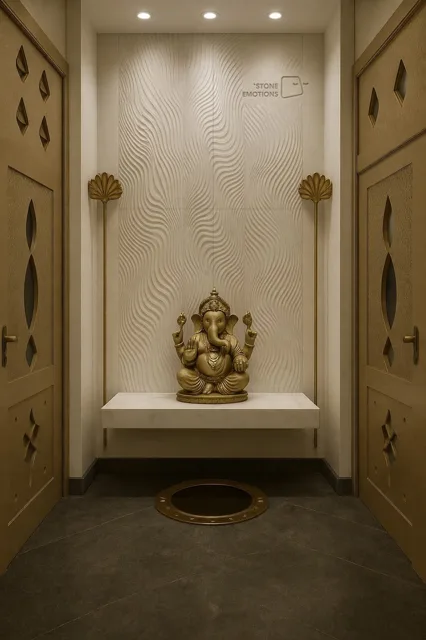
Begin with the sacred setting
Record the deity or sacred motif, the mandir’s dimensions, viewing position and the surrounding architecture. Explain any iconographic or ritual requirements at the start. A backdrop should be composed around the intended setting rather than treated as a decorative panel added after the room is complete.
Choose a calm hierarchy of detail
Decide what should be the focal point and what should remain quieter. Sacred geometry, botanical elements, relief figures and plain stone can be balanced in different ways. Review the design at the actual wall proportions so detail and negative space support the composition.
Resolve panel joints with care
Large stone backdrops are normally developed in panels. Important facial features and primary sacred details need particular care when locating joints. Ask to review the panel drawing alongside the artwork so the approved visual composition corresponds to the manufacturing layout.
Coordinate the pedestal and lighting
Share the position of the pedestal, lamps, concealed wiring, niches and nearby joinery. Lighting, access and maintenance belong in the architectural discussion. Use a physical sample to review the stone tone and finish, especially where warm or neutral lighting changes the appearance.
Build a complete enquiry
Send a site photo, wall width and height, project city, deity or motif reference and material preference. Include any confirmed drawings and the stage of the project. This helps the Stone Emotions team discuss design, stone and scope before preparing a project-specific proposal.
Continue planning your wall
For project-specific guidance, share your wall dimensions and a reference with our Udaipur team.