
A natural stone wall covering is a finished stone surface — large sawn slabs, fluted or grooved panels, or textured tiles — applied over an interior wall. Slabs let the stone’s veining become the design, fluted panels add rhythm and shadow, and tiles give modular texture. Choose by the look you want, the wall size, the finish and how the wall will be lit.
Wall covering vs cladding vs carving
The terms overlap, so it is worth being precise. In this guide a wall covering means a mostly flat, interior stone surface where the beauty comes from the stone itself, its finish and the layout of joints: book-matched slabs, fluted strips, honed tiles. Cladding usually describes rougher, textured facings such as rock face, stacked or rubble stone, inside or outside — covered in our natural stone wall cladding guide. Carving means a designed relief or engraving cut into the stone, covered in the CNC relief and 3D carving guide.
The distinction matters because each has different priorities. With slabs, the big decisions are block selection and layout. With fluted panels, it is the profile and the lighting. With carving, it is the drawing and the relief depth.
Large veined slabs
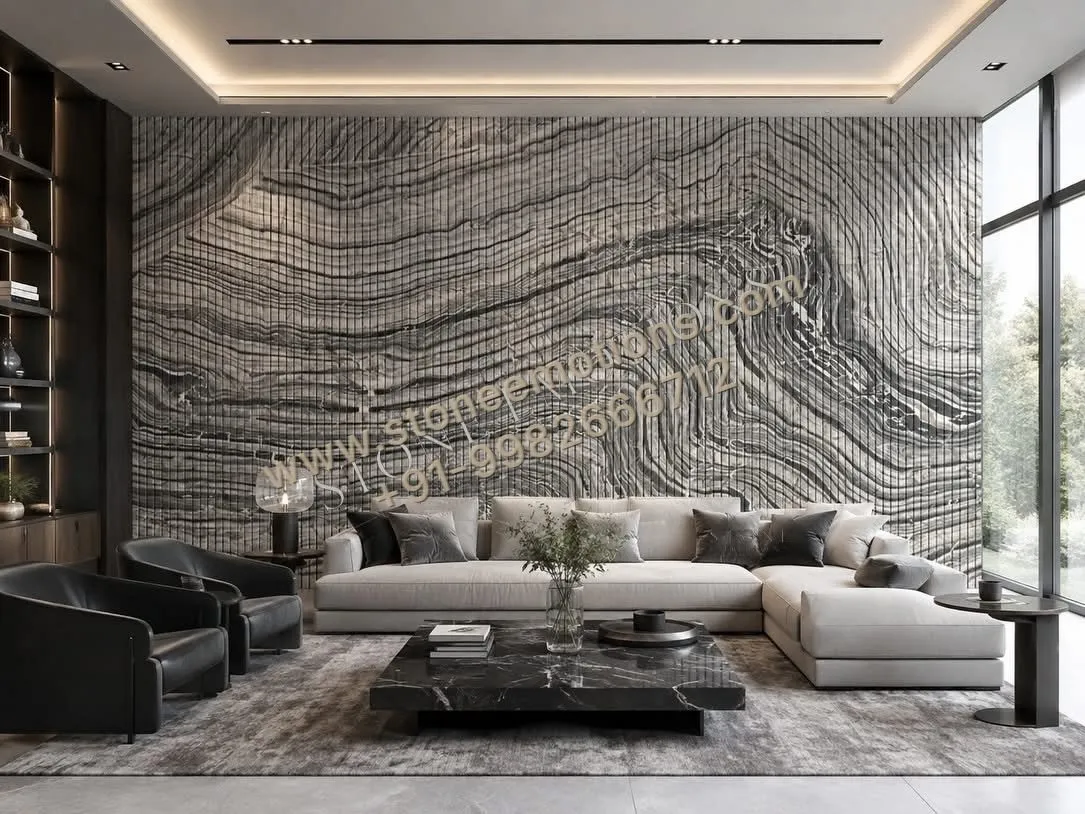
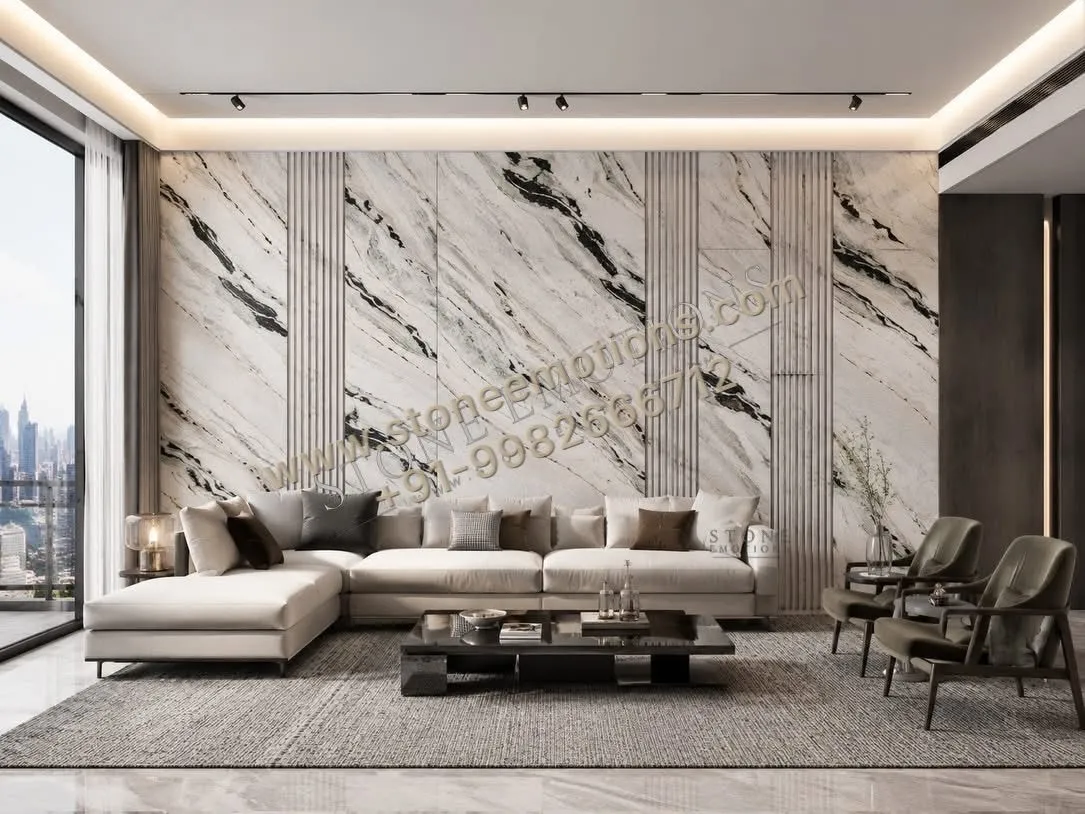
Large slabs cover a wall with very few joints, so the stone’s natural pattern reads as one composition. Strongly veined marbles and some quartzites are popular for this. Slabs can be laid as they come, or book-matched — consecutive slices opened like the pages of a book so the veining mirrors across a joint.
What to watch:
- Selection: veining is unique to each block. Ask to see the actual slabs, or photographs of them laid out, before cutting.
- Dry layout: lay the slabs out flat in order and approve the composition before installation.
- Joints and edges: plan where joints fall relative to furniture, TV positions and light fittings; corners can be mitred or finished with a return.
- Handling: large thin slabs are fragile; access routes, lifts and door widths affect the maximum size, so these are checked for each site.
Fluted and grooved stone panels
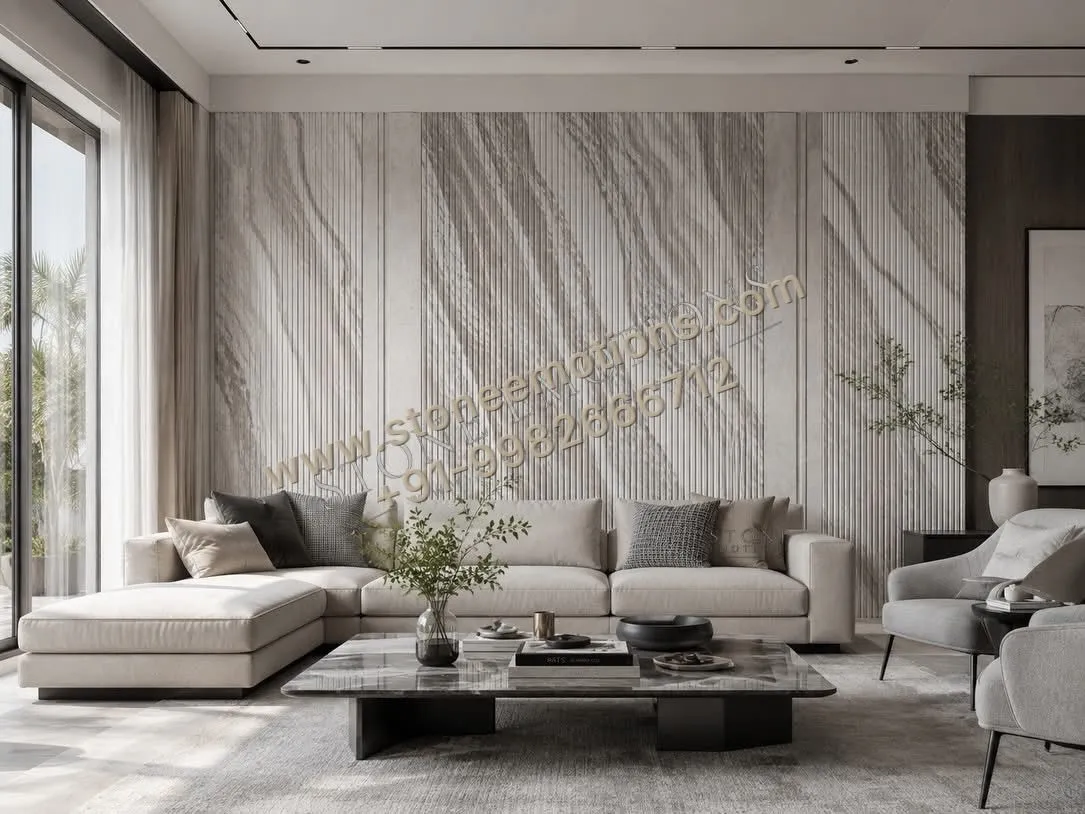
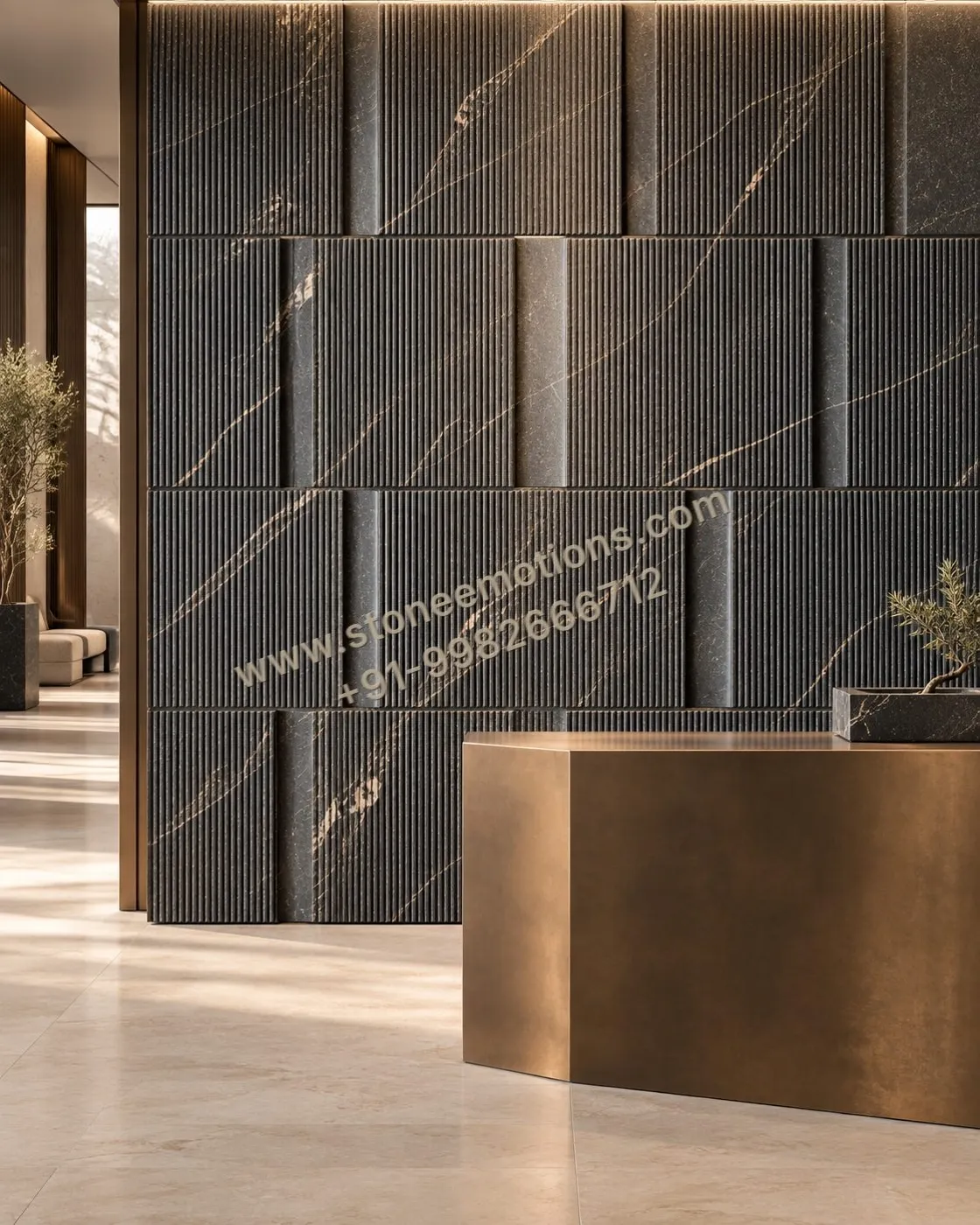
Fluted panels have parallel rounded channels; grooved or reeded panels have sharper V or square cuts. Either way, the repeated profile creates a regular rhythm of light and shadow and makes a tall wall feel taller. They suit living-room walls, double-height walls, reception desks and lobby backdrops.
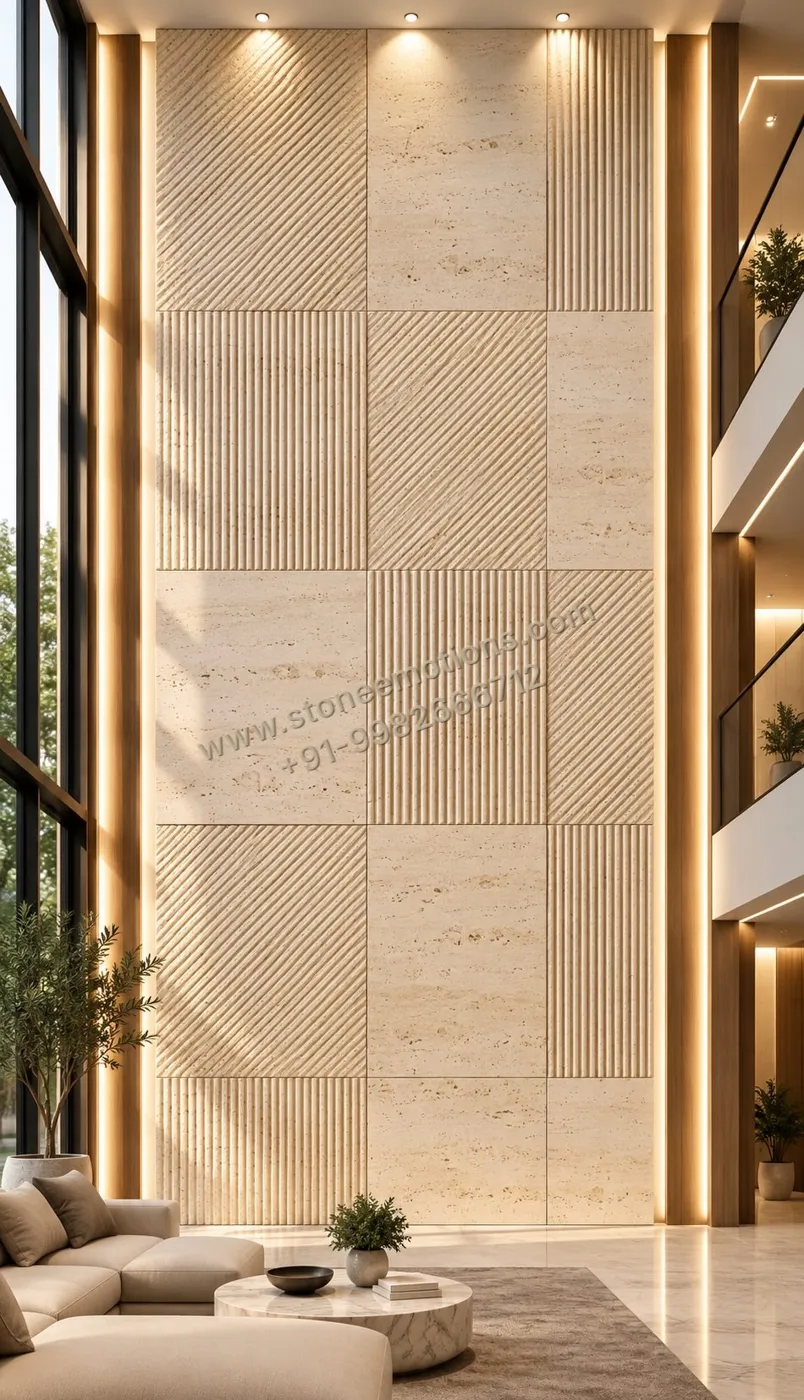
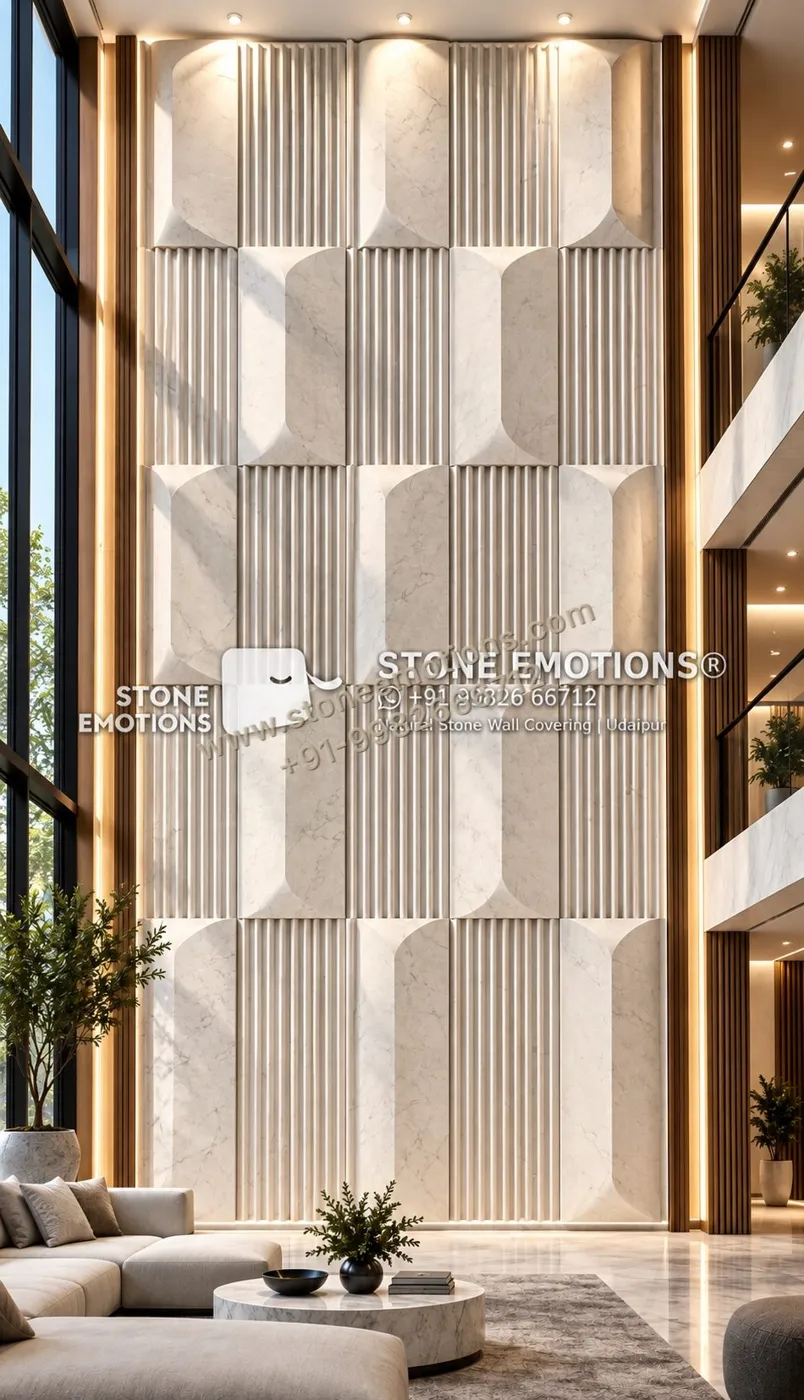
Profile depth, spacing and the panel width determine the look. Shallow, closely spaced flutes feel quiet and textile-like; deeper, wider flutes feel architectural. Fluting can also be combined with flat fields, backlit slots or a single carved motif. See the STRATA fluted panels collection and our fluted stone panels page for references.
Textured tiles and modular panels
Modular tiles — square or rectangular stone pieces with a texture, pattern or mixed finish — are easier to handle than slabs and allow a wall to be built up like a grid. Mixing two or three textures in a controlled pattern adds depth without the commitment of a full mural.
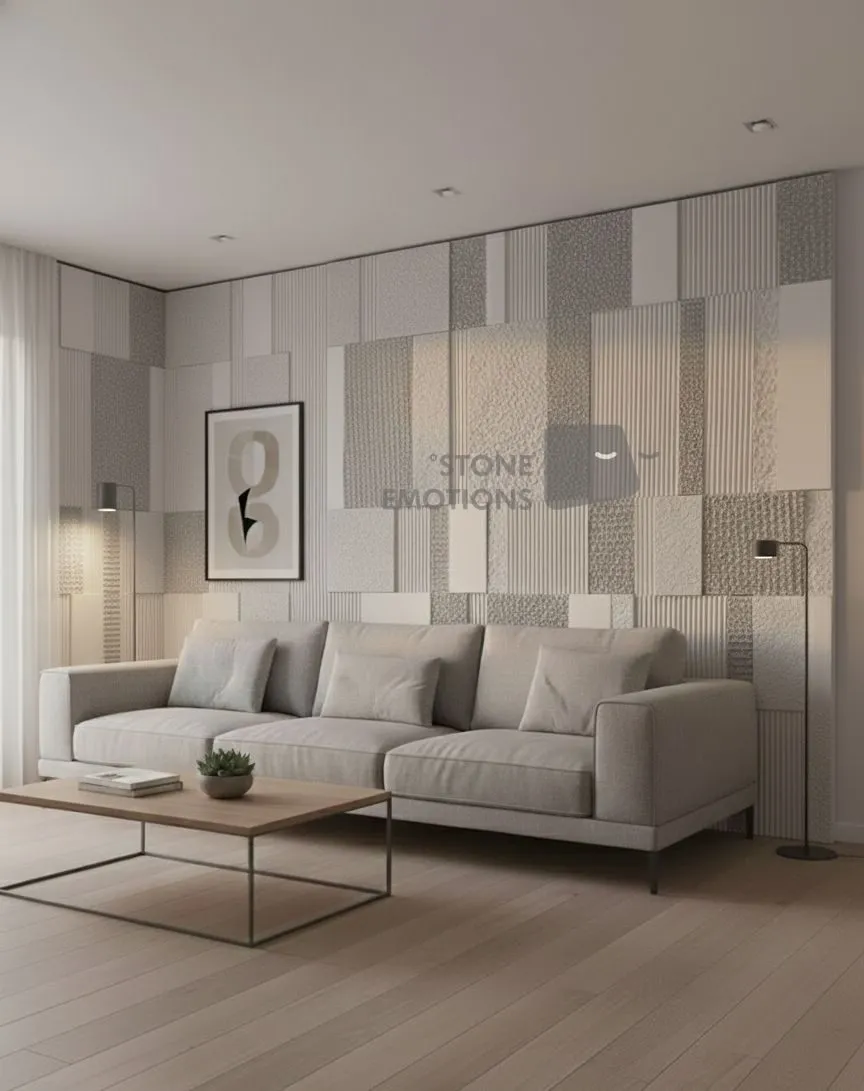
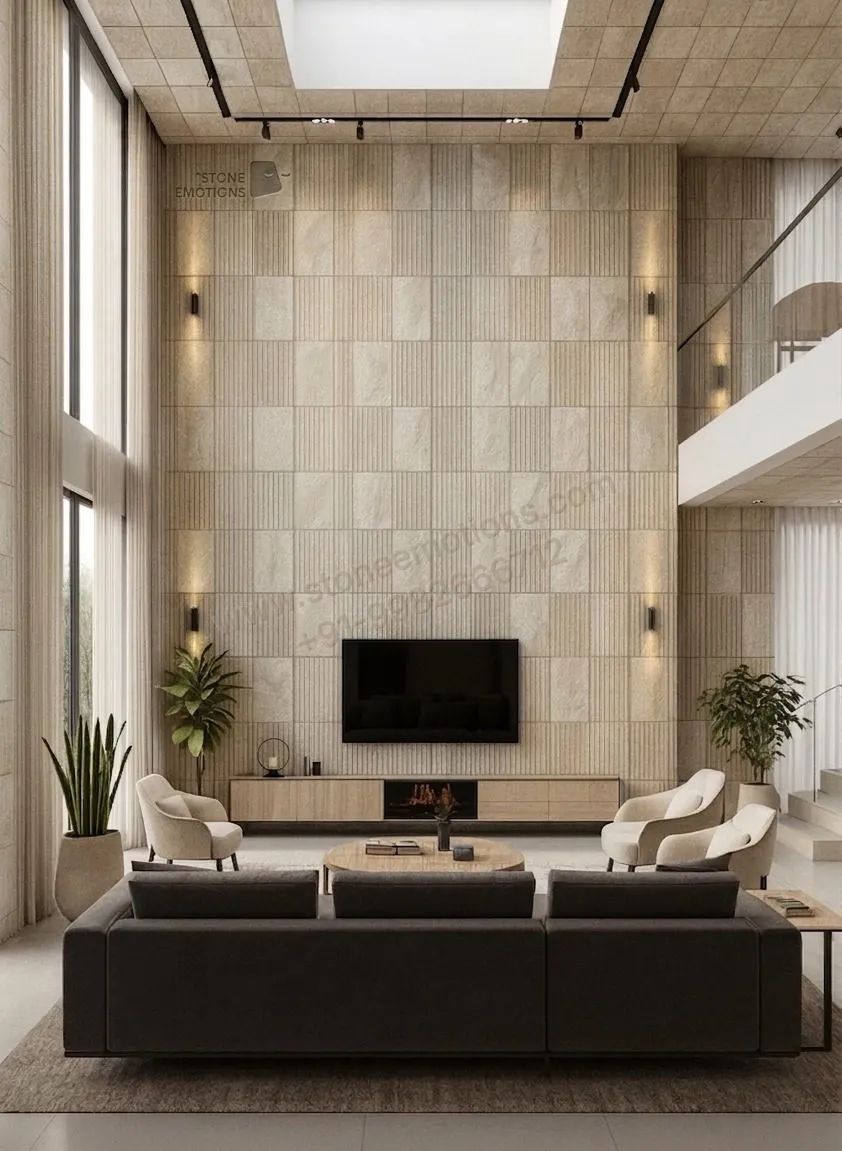
Grids work best when the module is chosen to suit the wall: ideally the wall width and height divide into whole modules, or the cut pieces are placed where they will not be noticed. A drawing of the joint layout should be approved before production.
Finishes compared
| Finish | Surface | Character | Notes |
|---|---|---|---|
| Polished | Glossy, reflective | Shows colour and veining strongly | Reflections show light fittings; mostly used on marble and granite |
| Honed | Smooth, matt or satin | Calm, contemporary | Hides fine scratches better than polish; very common indoors |
| Leathered / brushed | Soft texture you can feel | Tactile, warm | Good for touchable walls; can slightly darken colour |
| Flamed / bush-hammered | Rough, even texture | Rugged, matt | Suited to granite and some hard stones; also used outdoors |
| Fluted / grooved | Machined profile | Rhythmic, architectural | Profile and lighting angle define the effect |
Not every stone takes every finish equally well; the available finishes depend on the stone chosen.
Layout, joints and lighting
A stone wall covering is only as good as its layout. Before production, ask for an elevation drawing showing every slab or panel, the joint positions, and how the covering meets the floor, ceiling and side walls. Decide early whether switches, sockets, TV mounts and speakers sit in the stone, and if so, plan their exact positions so cut-outs fall within single pieces rather than across joints.
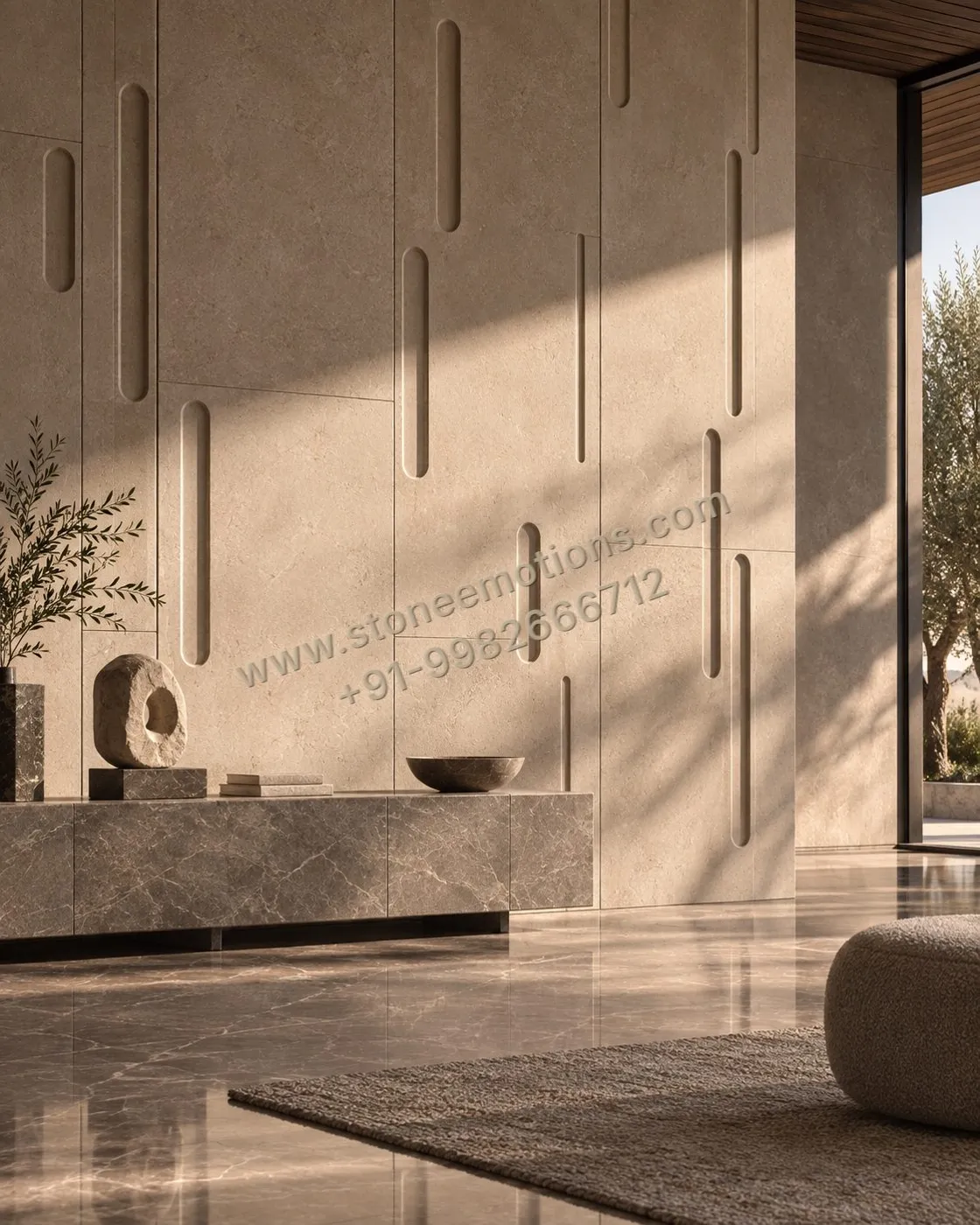
Lighting changes everything. Flat polished slabs look best with soft, even light that does not create hot spots; fluted and textured surfaces need light from the side or above to show their profile. Our article on lighting a carved stone relief wall explains grazing light, which applies equally to fluted panels.
Care and maintenance
Interior stone coverings need little maintenance. Dust with a soft cloth or brush, and clean with water and a pH-neutral cleaner where needed. Avoid acidic or harsh cleaners, especially on marble and limestone, which are sensitive to acids. Whether a sealer is useful depends on the stone and location — near kitchens or wash areas it can help with staining; elsewhere it is often unnecessary. Follow the care advice given for your specific stone.
Common mistakes to avoid
The most common disappointment with stone wall coverings is not the stone itself but the layout. Slabs cut without a dry layout can end up with a strong vein running awkwardly through the middle of a TV or a bed headboard. Fluted panels installed without planned lighting can look flat and grey. Tile grids that do not divide evenly into the wall leave thin slivers at the edges. Each of these is avoided by approving an elevation drawing and, for slabs, a photograph of the actual slabs laid out in order before cutting. Also allow for the thickness of the covering at door frames, skirtings and ceiling lines so that the finished stone sits cleanly against adjoining finishes.
How to choose
- Want the stone itself to be the art? Choose large slabs and invest in selection and dry layout.
- Want rhythm and height? Choose fluted or grooved panels and plan grazing light.
- Want texture with easy handling? Choose modular tiles in a planned grid.
- Approve physical samples of stone and finish.
- Approve a joint-layout drawing before production.
Explore: Veined slab wall coverings Living room walls STRATA fluted panels Materials Planning a living room feature wall