
Outdoor stone walls need a design that looks good and a stone and system that cope with sun, rain and, near pools, constant moisture. Textured formats — rock face, fluted, stacked and rubble — age gracefully outdoors, while carved and inlaid designs suit covered or indoor pool areas. Dense, low-absorption stone, good drainage and project-specific fixing are essential.
Start with the exposure
An exterior wall’s design depends first on how exposed it is. A covered verandah or an indoor pool is very different from a south-facing boundary wall or the splash zone of an outdoor pool. Write down: direct sun, rain, splashing, chlorinated or salt water, garden irrigation, and whether the wall is near the sea. These conditions drive the stone choice, the finish and the detailing.
Pool wall ideas
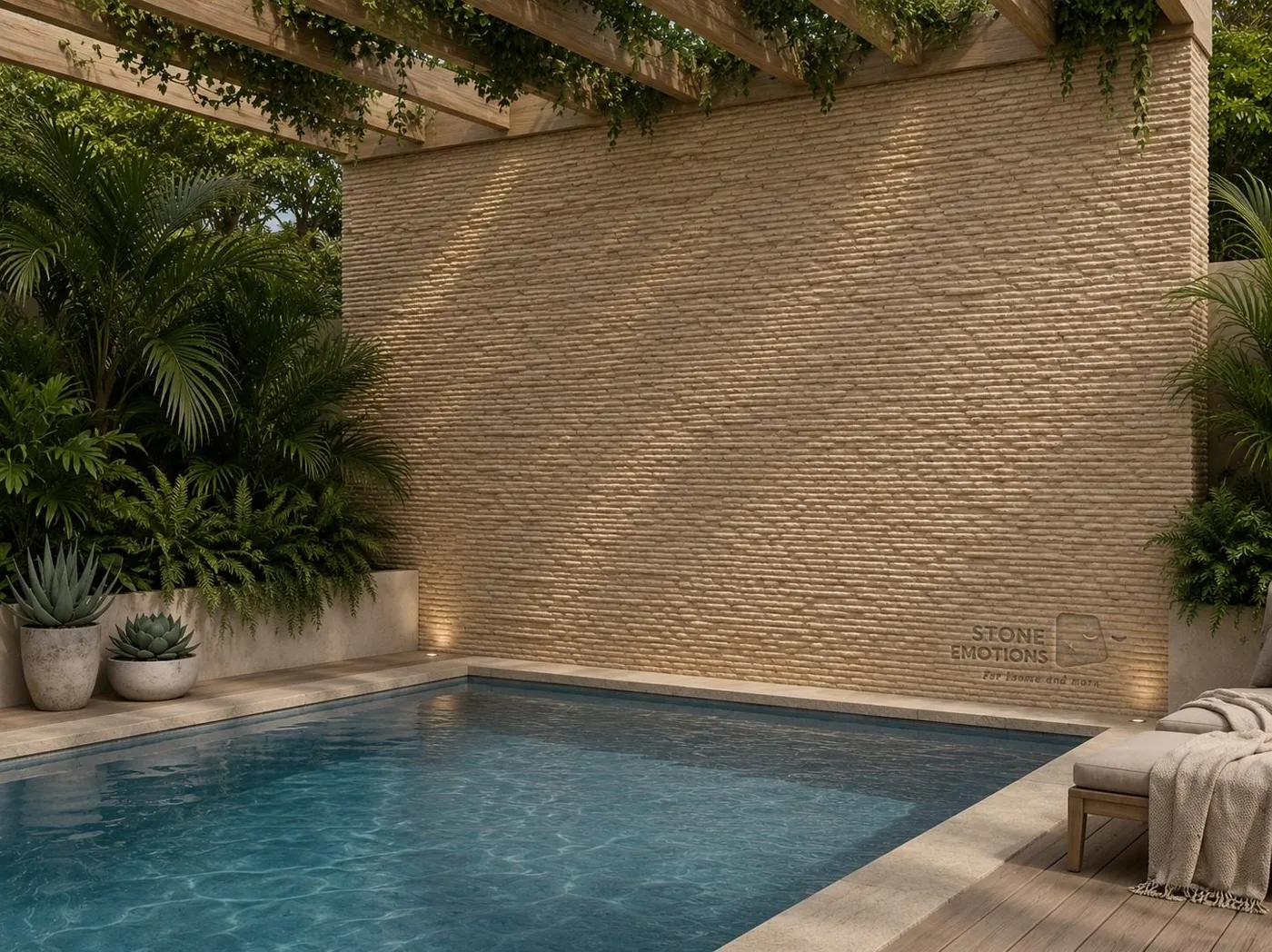
Rock face and strata courses
Horizontal rock face courses give a natural, resort-like backdrop and hide water marks better than smooth stone.
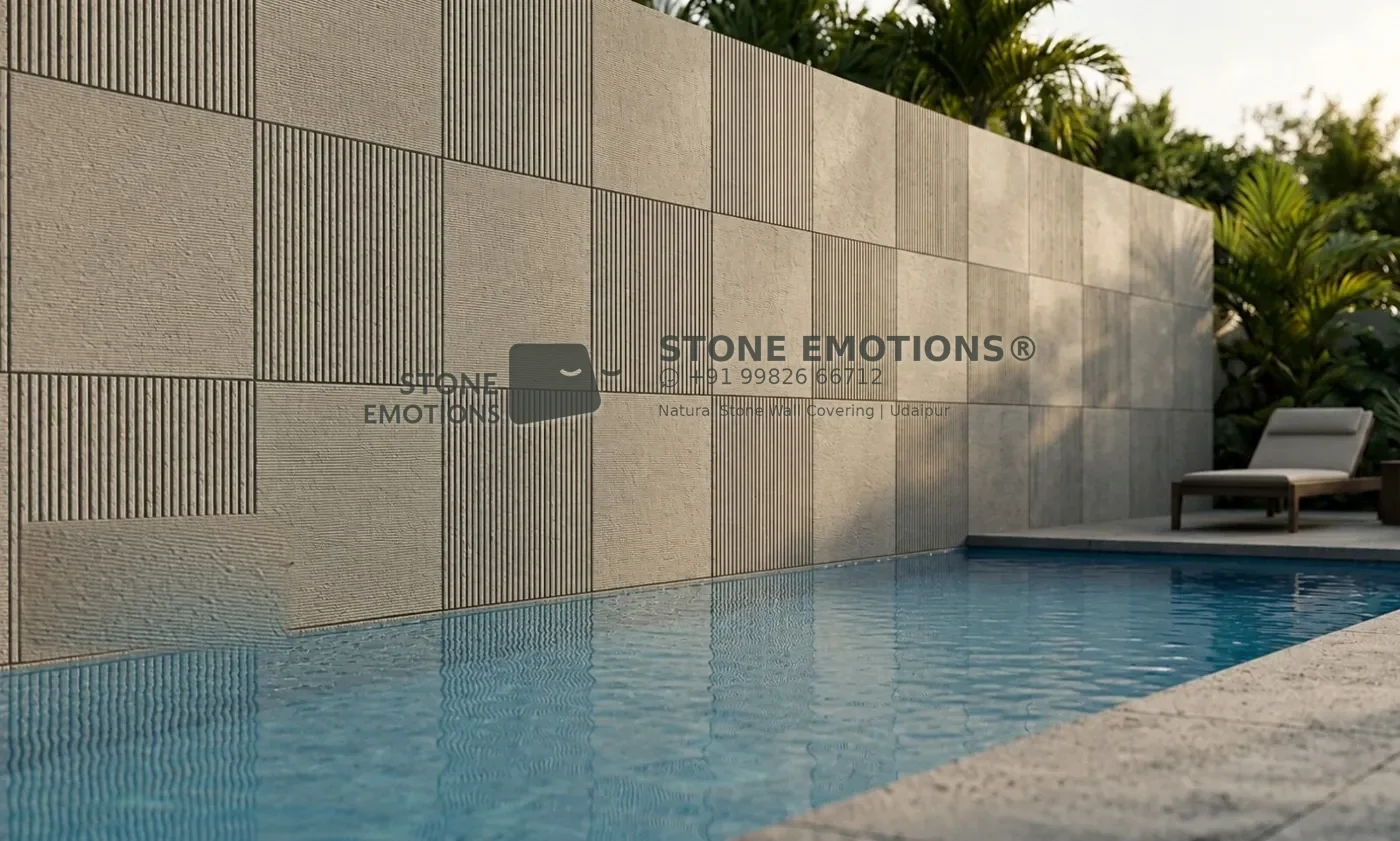
Fluted sandstone
Vertical flutes catch the low evening sun and reflect beautifully in the water.
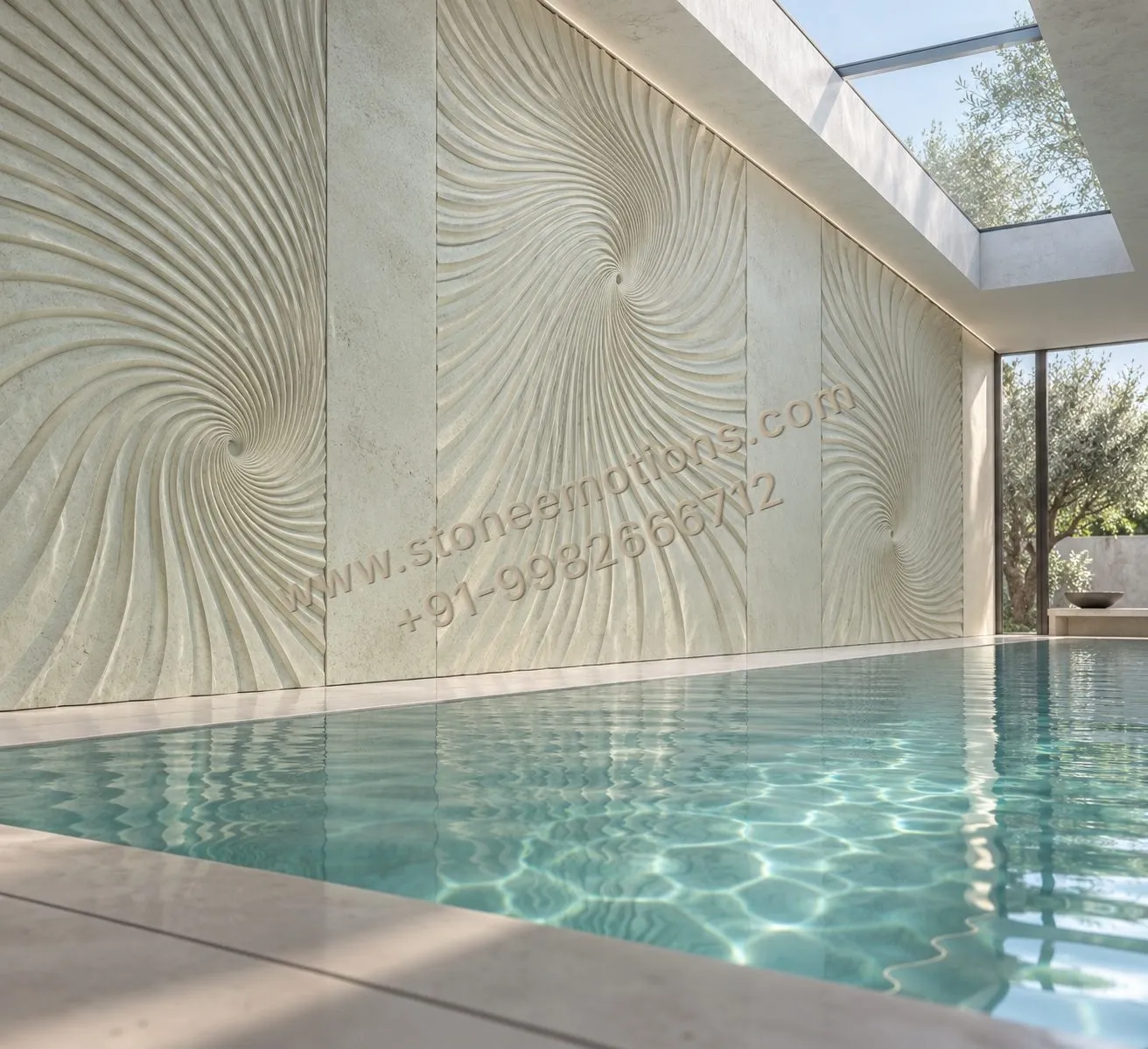
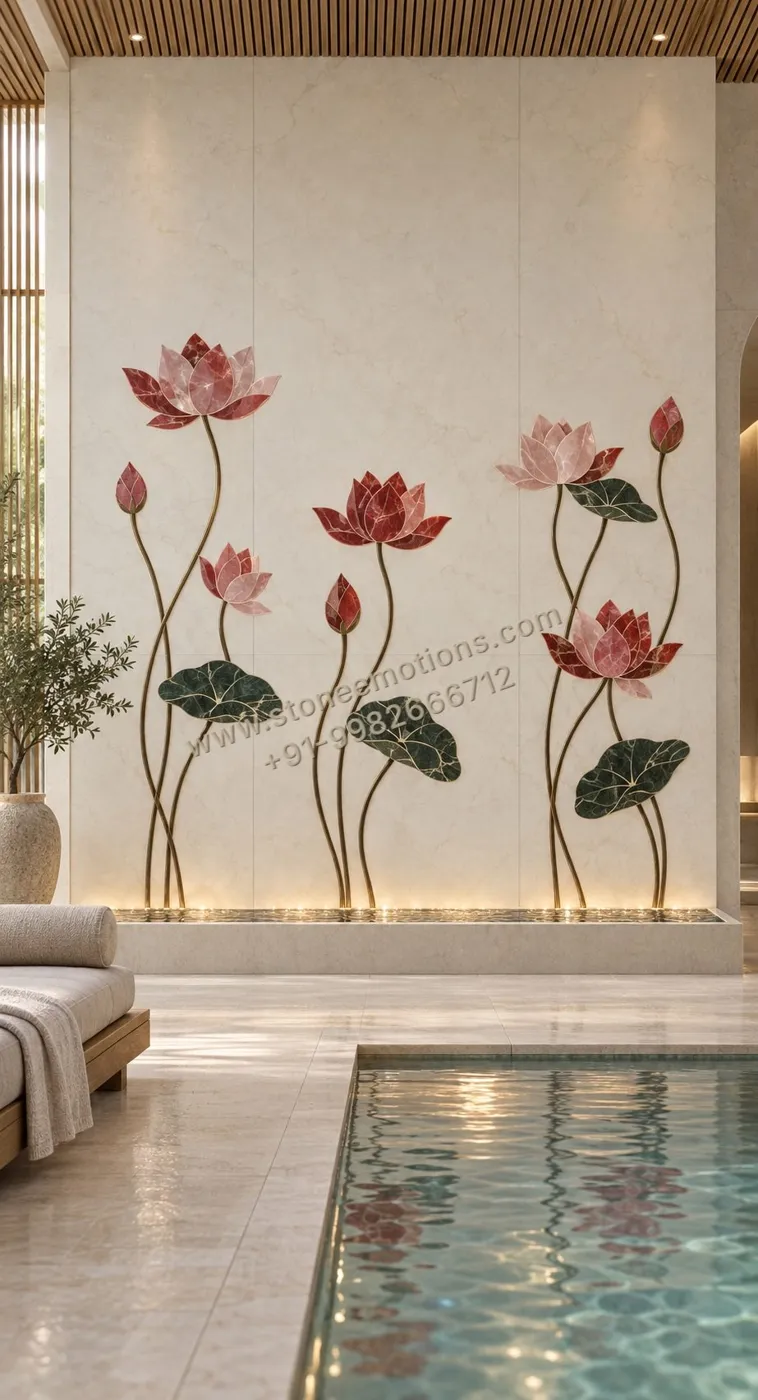
Carved and inlaid feature walls
Swirl reliefs or colourful lotus inlay make a statement in indoor or covered pools, where exposure is lower.
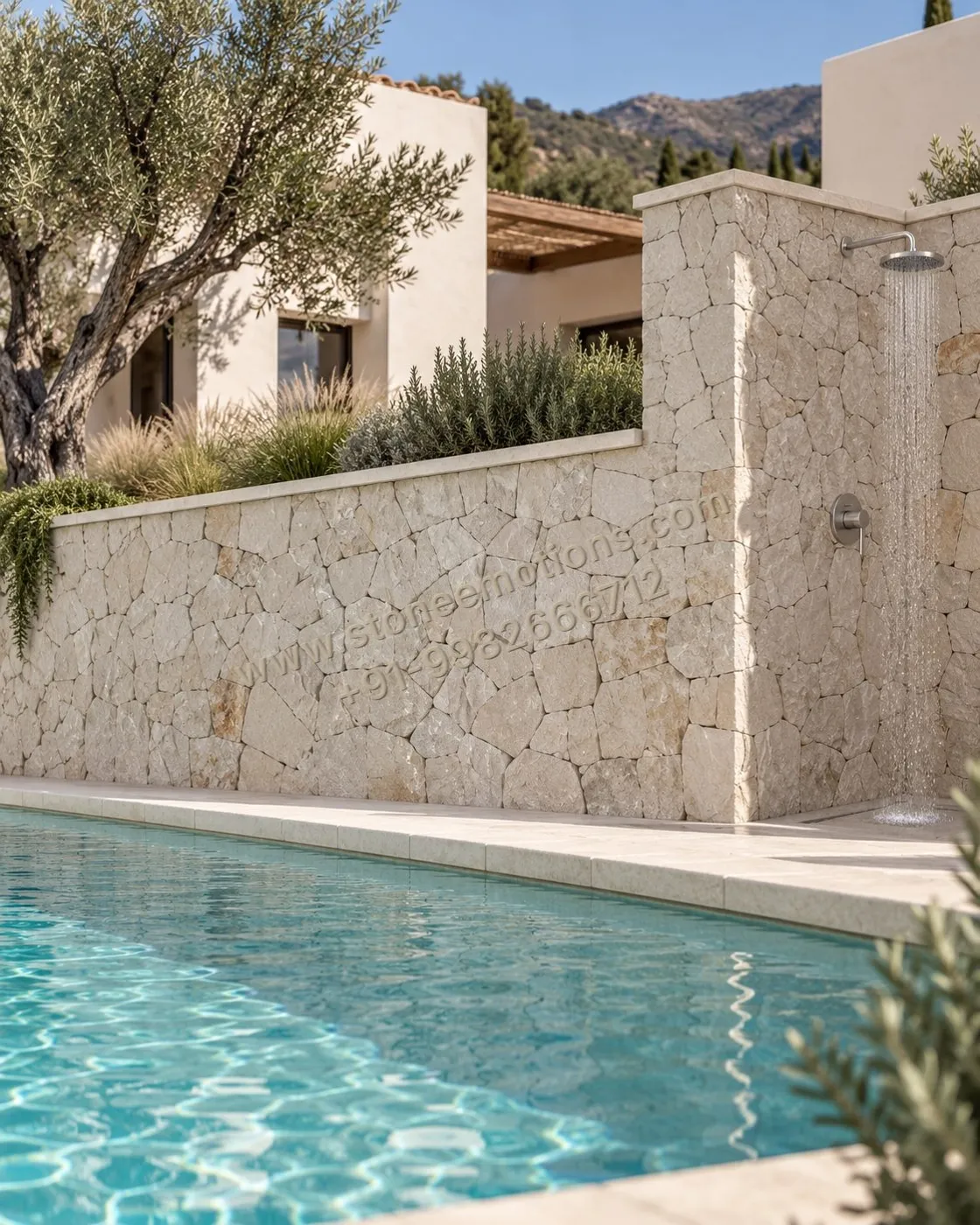
Random stone
Natural random stone with a shower or water spout feels relaxed and garden-like.
Garden, boundary and facade ideas
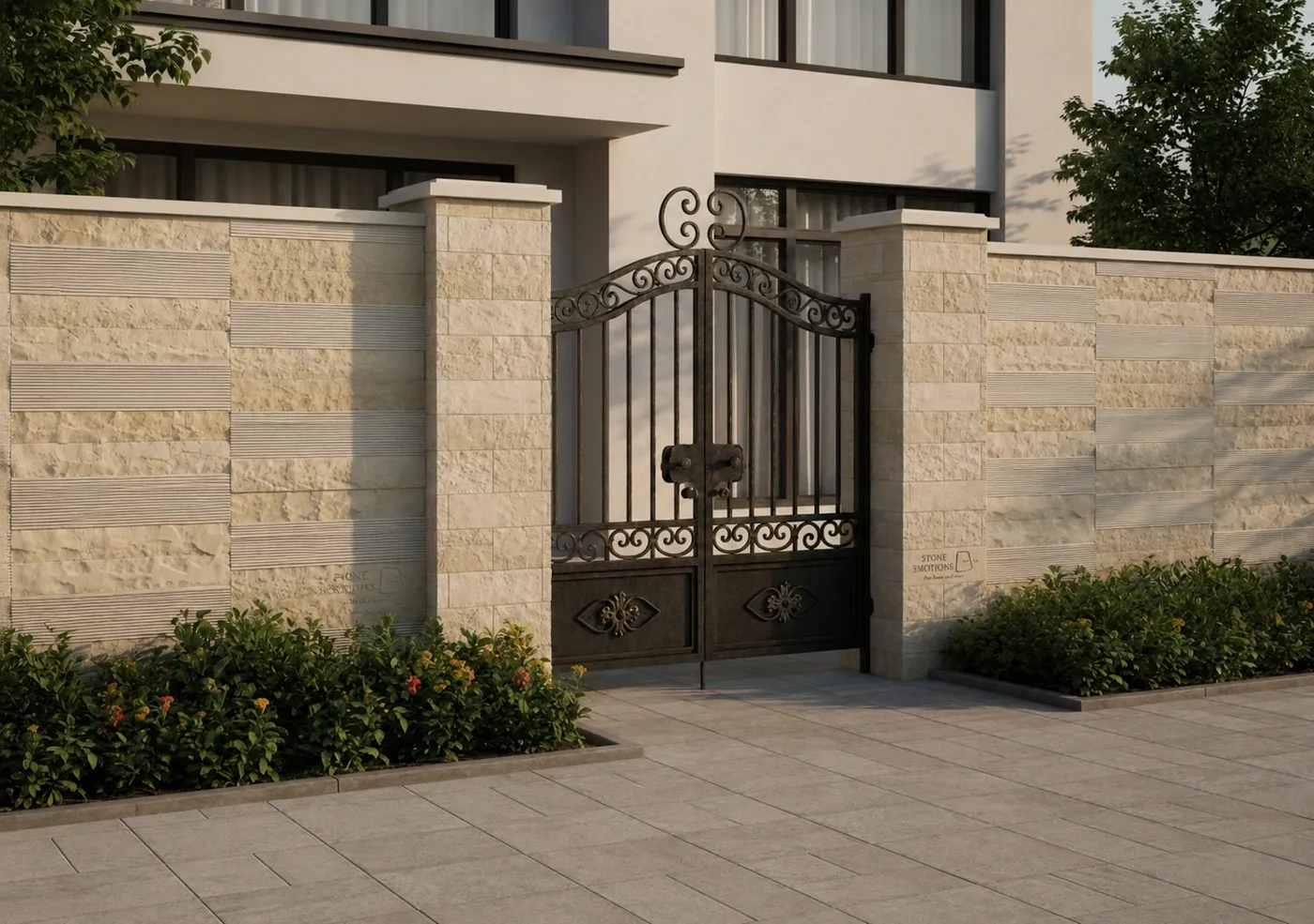
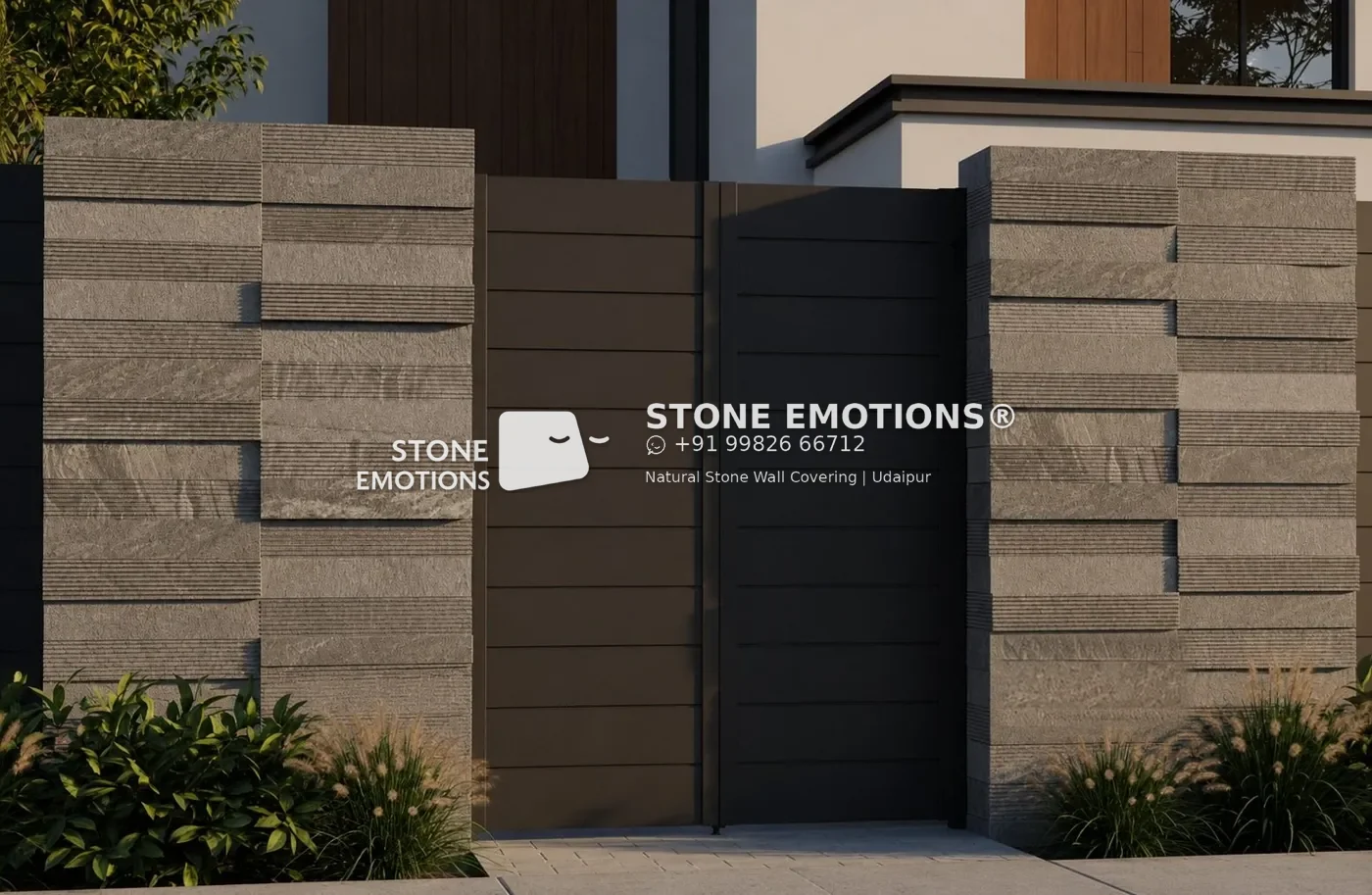
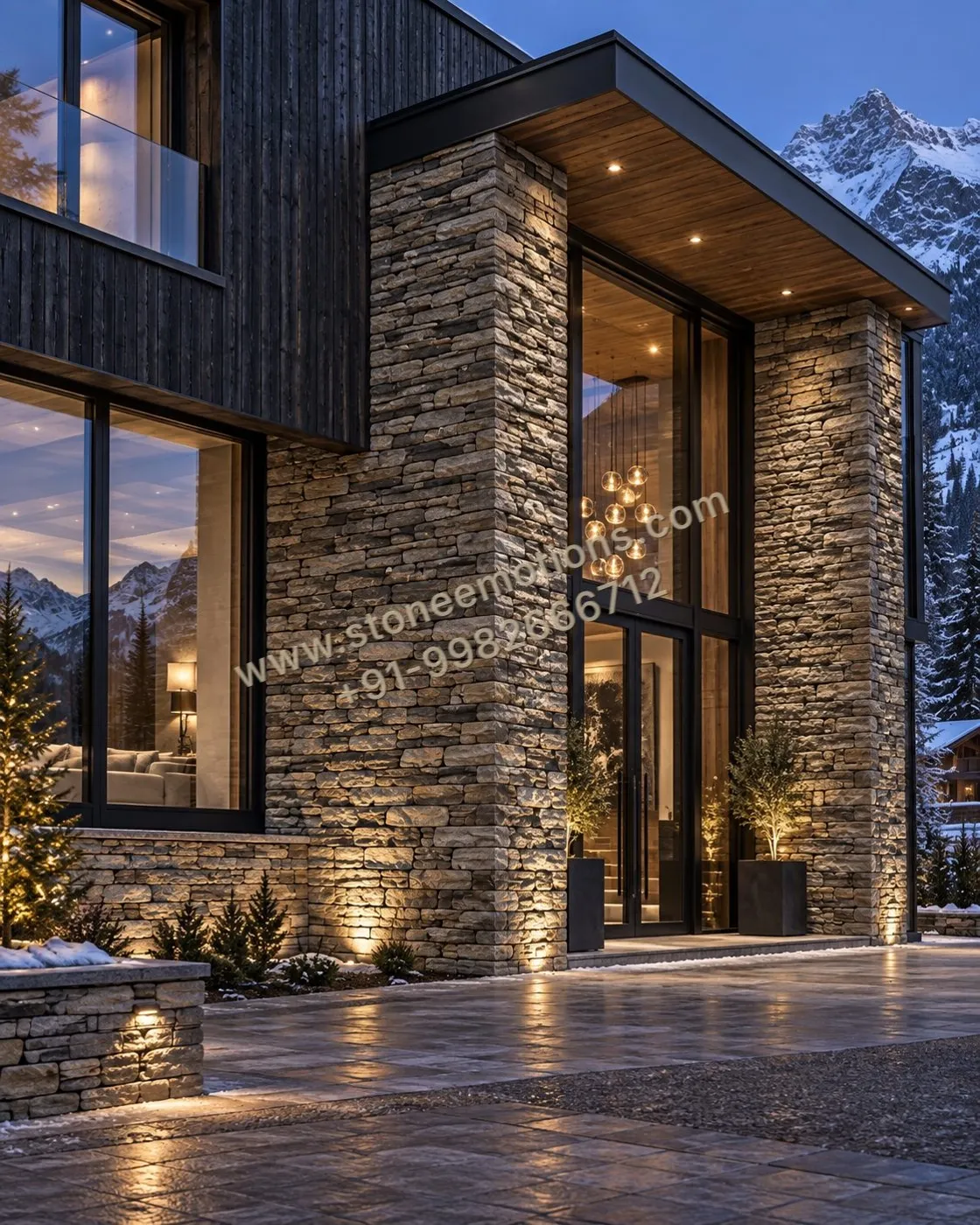
For boundary walls and gate pillars, stacked sandstone in beige or grey gives a clean, modern line; for gardens, random rubble feels softer and more rustic. On facades, stacked stone columns or a stone-clad entrance volume can define the architecture.
Exterior formats compared
| Format | Outdoor character | Good for | Consider |
|---|---|---|---|
| Rock face | Hides weathering, strong shadow | Pool backdrops, elevations | Projection near walkways |
| Fluted | Rhythmic, catches low sun | Pool walls, entrance walls | Water run-off along flutes |
| Stacked strips | Clean horizontal lines | Boundary walls, pillars, facades | Corner returns, fixing at height |
| Random rubble | Rustic, landscape-like | Garden and retaining walls | Drainage and pointing |
| Carved / inlay | Decorative focal point | Covered or indoor pools | Exposure; avoid water-holding ledges |
Stone and detailing outdoors
Dense, low-absorption stones — granites, quartzites, basalt and suitable sandstone varieties — perform best outside. Absorption, frost and salt resistance vary by stone and quarry, so ask for the specific stone’s suitability. Good detailing matters as much: copings that throw water off the face, drainage behind retaining walls, movement joints, and mechanical fixings where height or weight require them. Around pools, the stone should be checked for chlorinated or salt water, and a suitable sealer may be recommended for some stones.
The installation sequence is covered in stone wall cladding installation planning, and cladding formats in the natural stone wall cladding guide.
Lighting outdoor stone
Uplights at the base of a rock face or fluted wall create dramatic shadows at night; underwater light reflects texture onto the pool. Use fittings rated for outdoor or wet locations and plan cable routes before cladding.
Planning an exterior stone wall
Exterior walls benefit from planning in this order. First, check the structure: a boundary or retaining wall must be designed for its height and soil loads before any stone is chosen. Second, decide the drainage — weep holes, a drainage layer behind retaining walls, and copings that throw water clear of the face. Third, choose the stone and format for the exposure. Fourth, agree the fixing system and movement joints with the installer. Only then finalise lighting and planting, because uplights, irrigation lines and planter boxes all interact with the stone.
For pool walls, also coordinate with the pool contractor: the height of the water line, splash zone, overflow channels and any water features. Stone right at the waterline sees the most wetting and drying, so it is worth discussing that zone specifically.
Common mistakes outdoors
- Choosing by photograph alone. Outdoor light is strong; approve samples outside, in sun and shade, wet and dry.
- Flat tops without copings. Water sitting on top of a wall soaks down through joints; a projecting coping with a drip helps.
- Ignoring irrigation. Sprinklers that constantly wet a wall can encourage staining and algae.
- Fine detail in full exposure. Delicate carving outdoors weathers faster; keep fine carving for covered areas.
- Acidic cleaners. These can etch calcareous stones such as marble and limestone.
A short site visit or video call with photos of the wall, its orientation and surroundings usually answers most of these questions early.
What to send for an exterior wall
Send the wall’s length and height, its use (pool backdrop, boundary, facade, garden), orientation if known, city, photographs in daylight and any drawings. Mention whether the wall is new or existing, whether it gets splashed or irrigated, and the look you prefer. With this information the stone, format and finish can be shortlisted and samples prepared for you to check outdoors, in both sun and shade.
If the wall is part of a larger landscape or architectural package, share the architect’s or landscape designer’s drawings so the stone coursing can align with steps, copings, paving and lighting.
Care outdoors
Rinse pool walls periodically to remove chlorine or salt residue, clear algae or moss with a soft brush and stone-safe cleaner, and inspect joints and sealant each year. Avoid acidic cleaners on calcareous stones such as marble and limestone.
Explore: Exterior & pool walls TERRAIN cladding Natural stone wall cladding Linear Strata design Poolside modules design