
For bedrooms, calm stone feature walls work best behind the bed — soft waves, mandala medallions, geometric relief or a warm wood-toned sandstone. Living rooms can take a stronger statement such as a figurative relief, botanical panels or a full carved mural behind the sofa or TV. Match relief depth to viewing distance and plan the lighting with the furniture.
Bedroom vs living room: different jobs
A bedroom wall is seen mostly from the bed and at close range in soft light, so it should feel restful. A living-room wall is seen from across the room, by guests, at different times of day, so it can carry more contrast and a clearer focal point. Dining walls sit in between and are often seen while seated. If you are working through the practical steps, see planning a living room stone feature wall; this page is about design ideas.
Bedroom back wall ideas
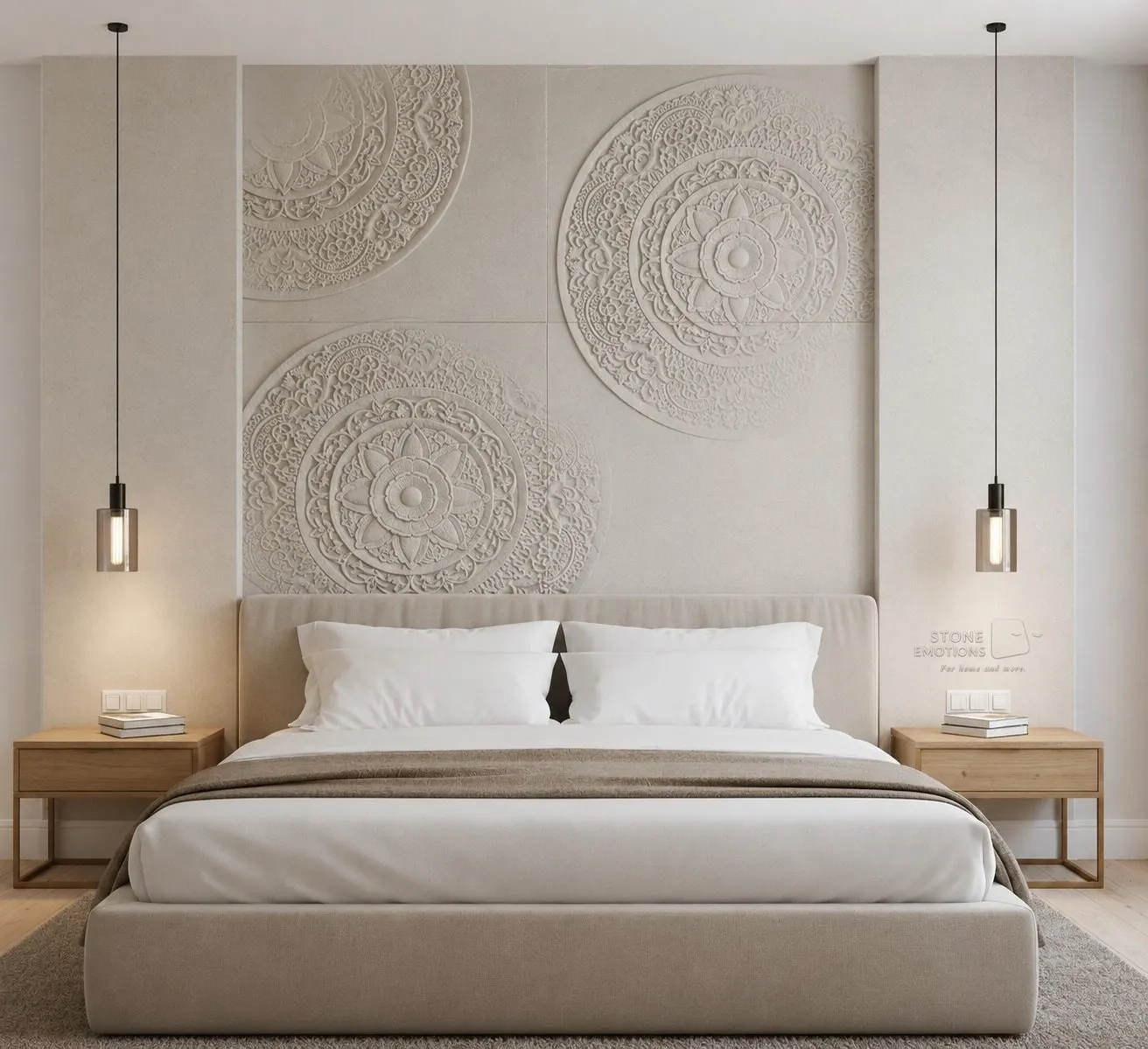
Mandala medallions
Two or three carved mandalas on a pale stone field give a balanced, symmetrical headboard wall that feels traditional but uncluttered.
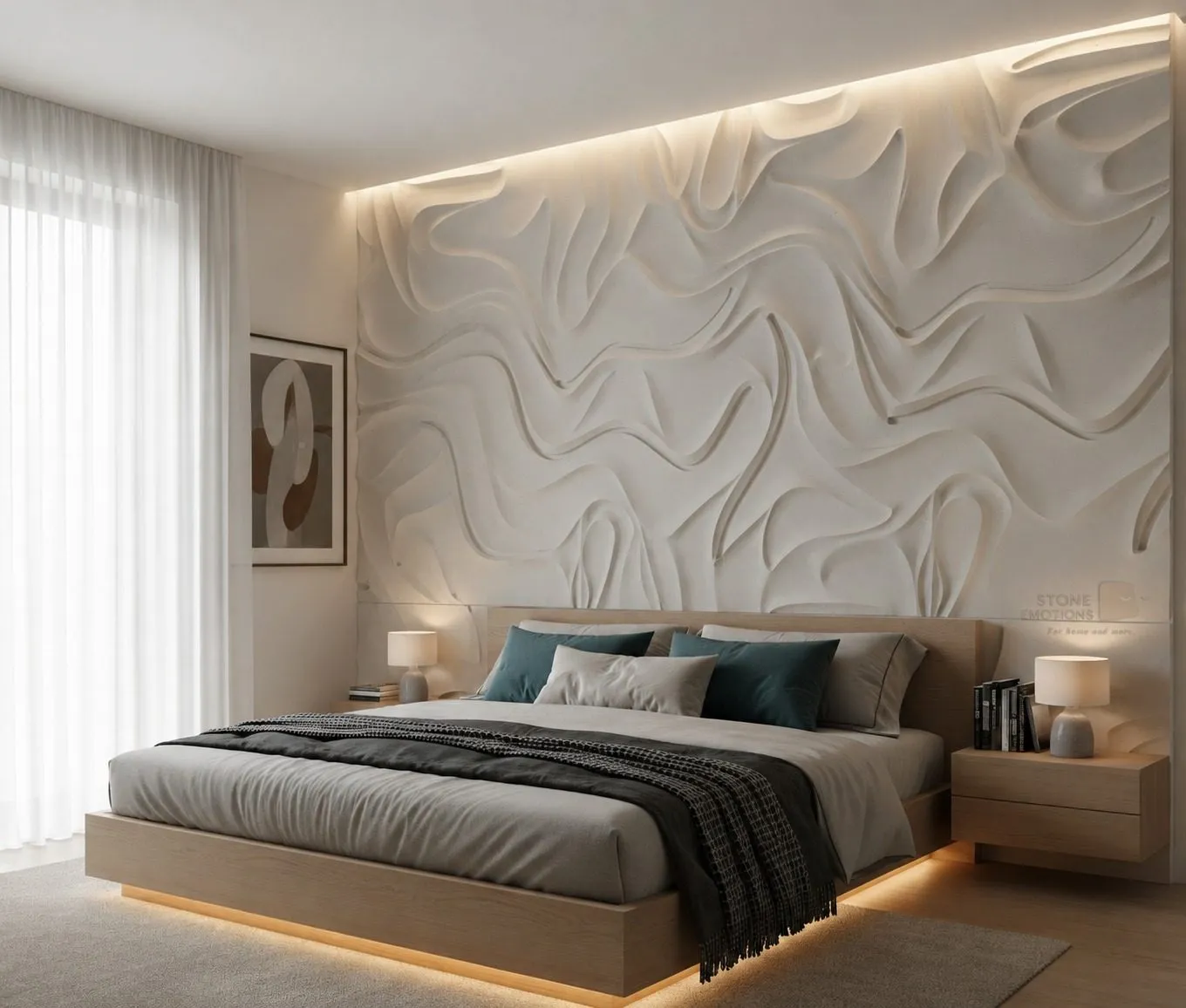
Soft waves and flowing forms
Organic wave relief reads like fabric or sand dunes and suits contemporary bedrooms. Concealed light above or below the wall makes the waves glow.
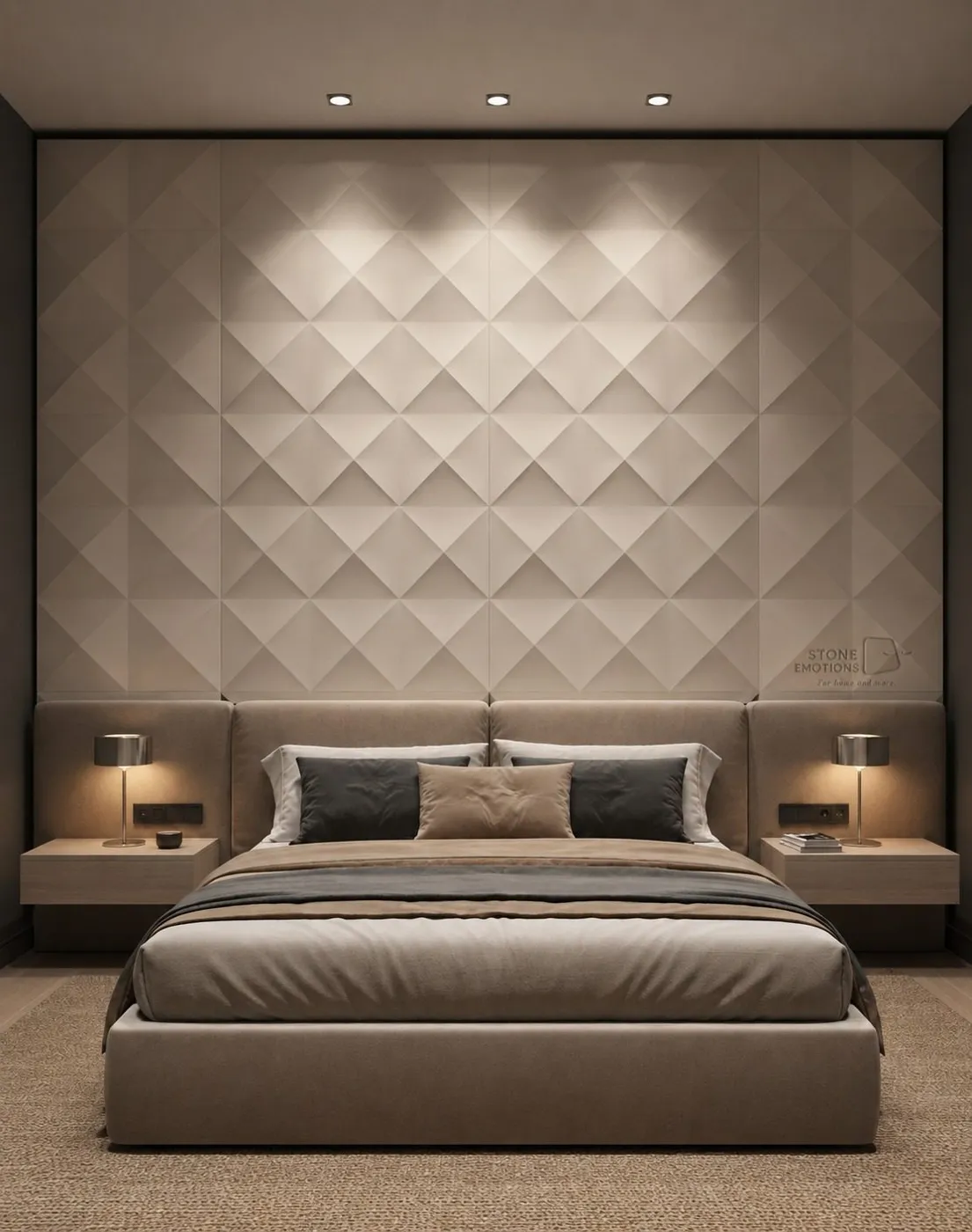
Geometric relief
Diamonds, facets and grids give crisp, tailored texture without pictorial content.
Warm wood-toned sandstone
Sandstones with brown, teak-like banding bring warmth; carved into flowing dunes, they become a natural headboard.

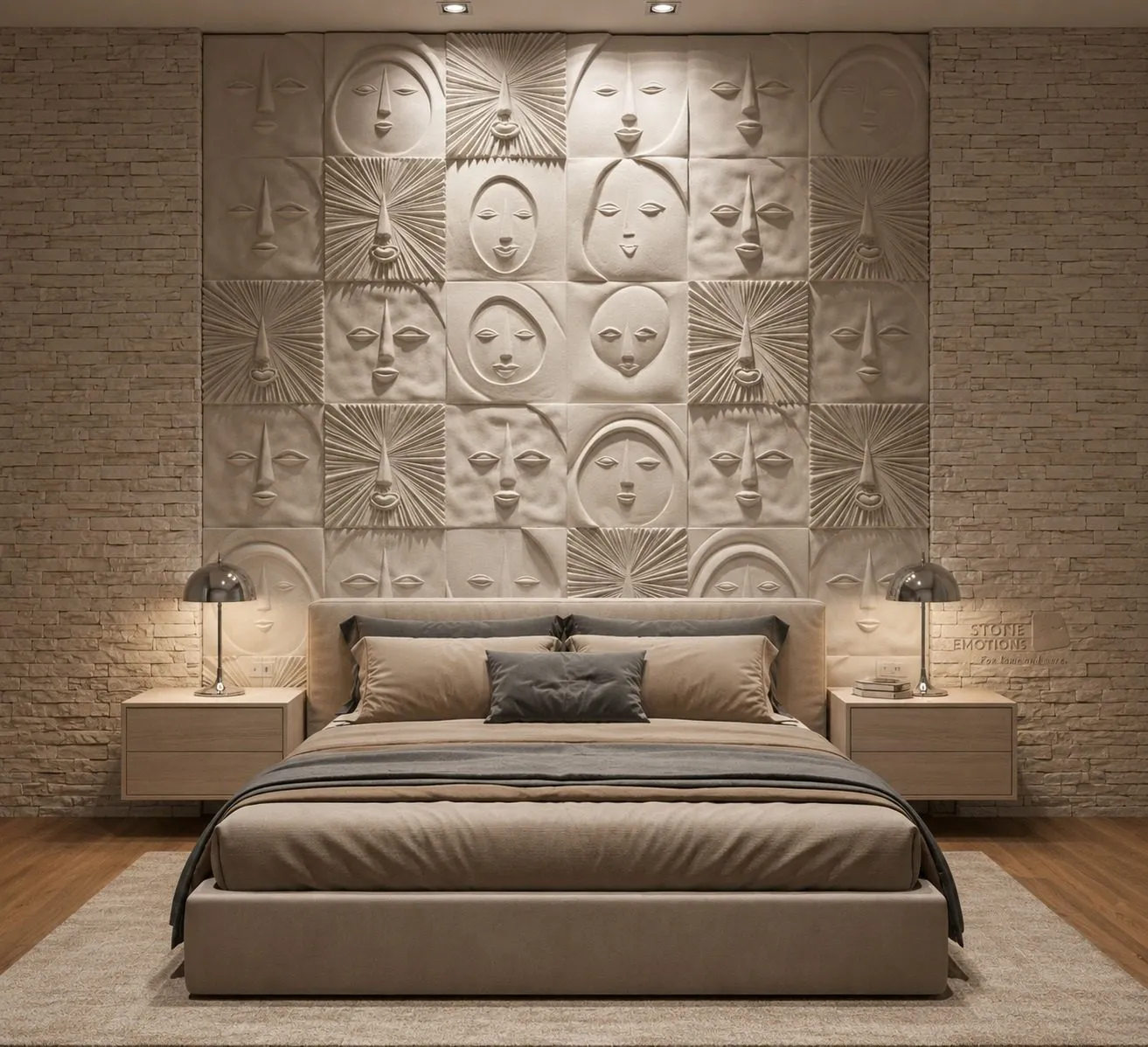
Faces and portraits
Abstract tribal faces or a single portrait relief make a personal, artistic statement for those who want more character.
Living room ideas
Figurative reliefs
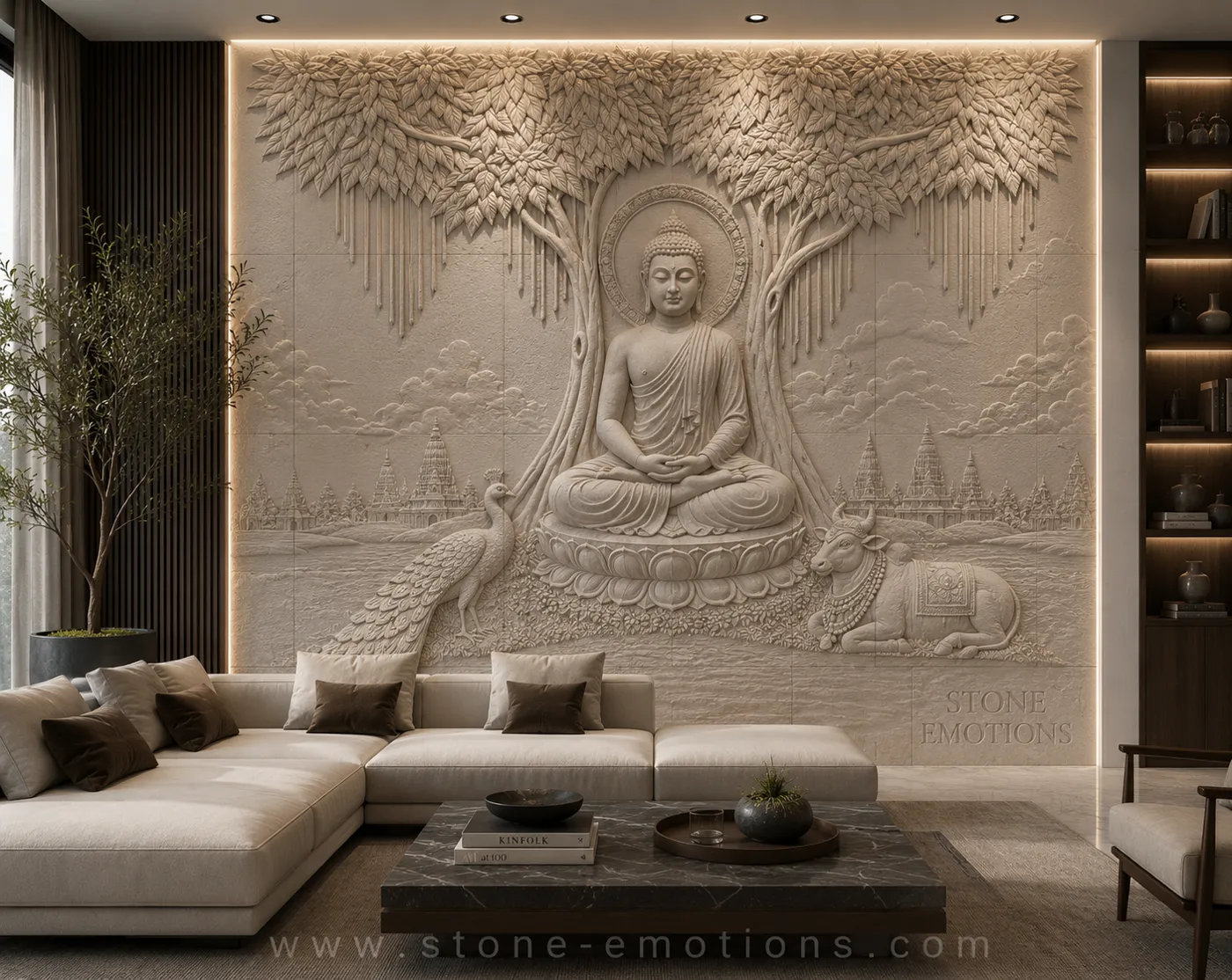
A Buddha under the bodhi tree, Krishna, or a tree-of-life composition behind the sofa creates a calm, meaningful focus. See divine figure stone reliefs.
Botanical and lotus panels
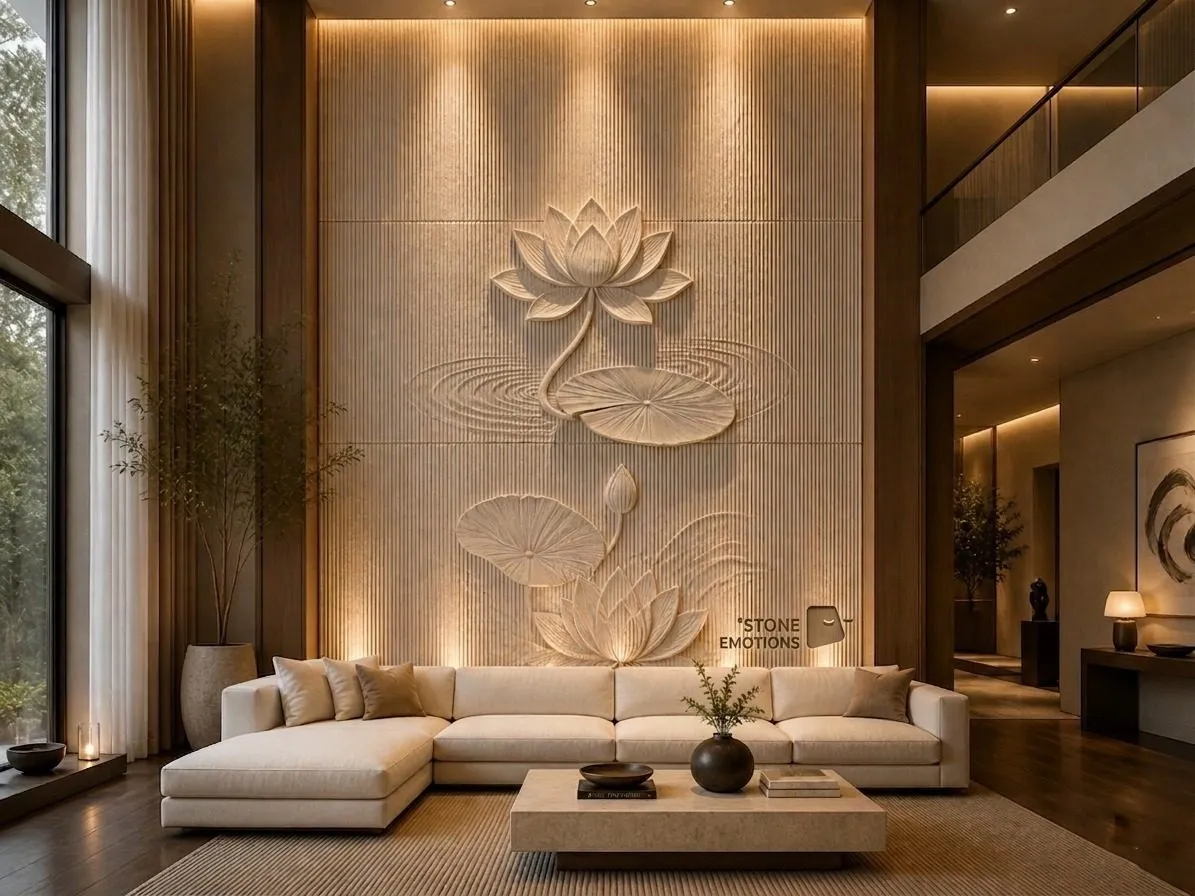
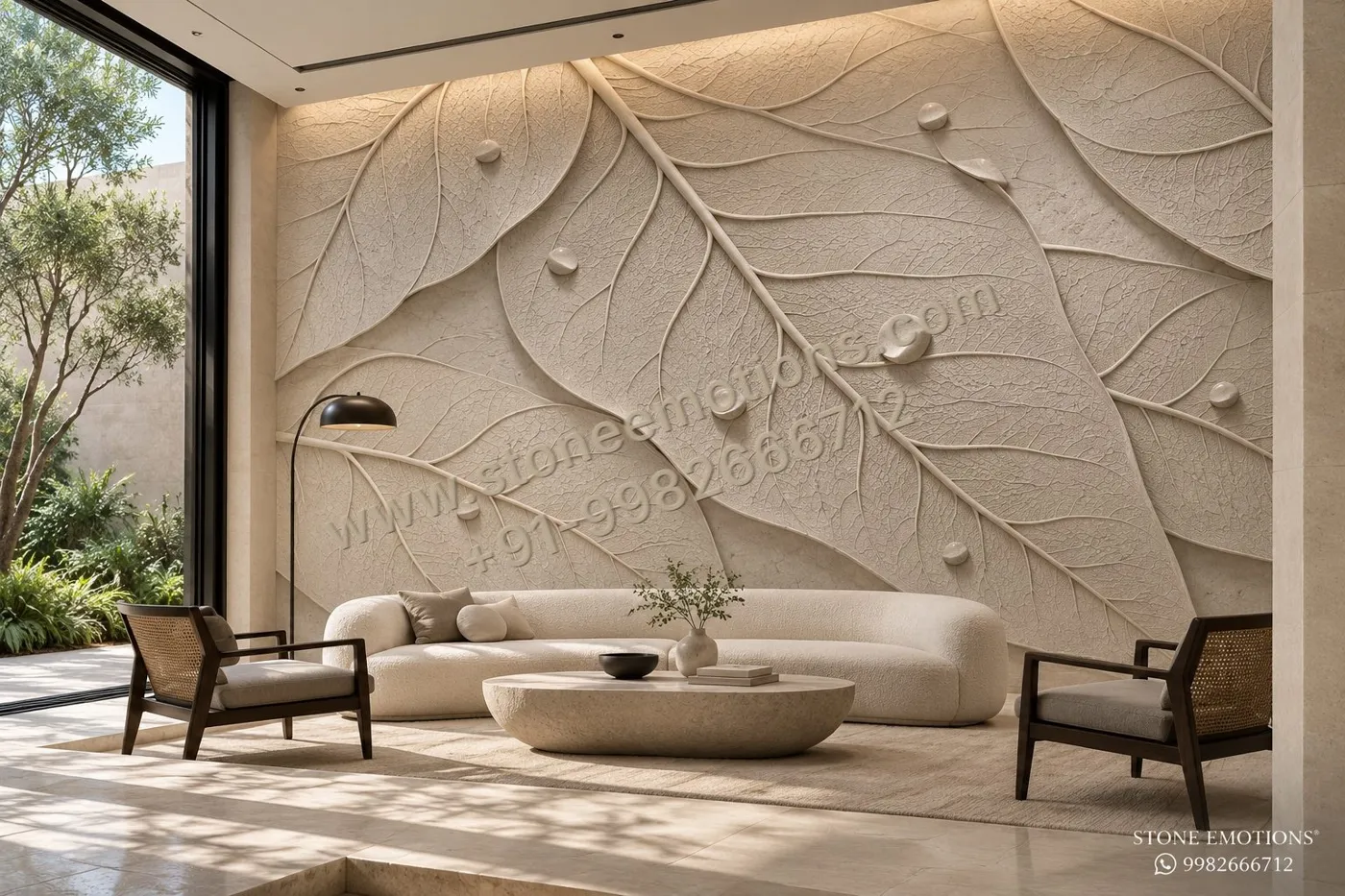
Large leaves, lotus flowers or scattered botanical motifs on a modular panel grid are easy to scale to any wall width.
Veined slabs
When you want the stone itself to be the art, large veined slabs give a bold, modern wall; see the wall coverings guide.
Dining room ideas
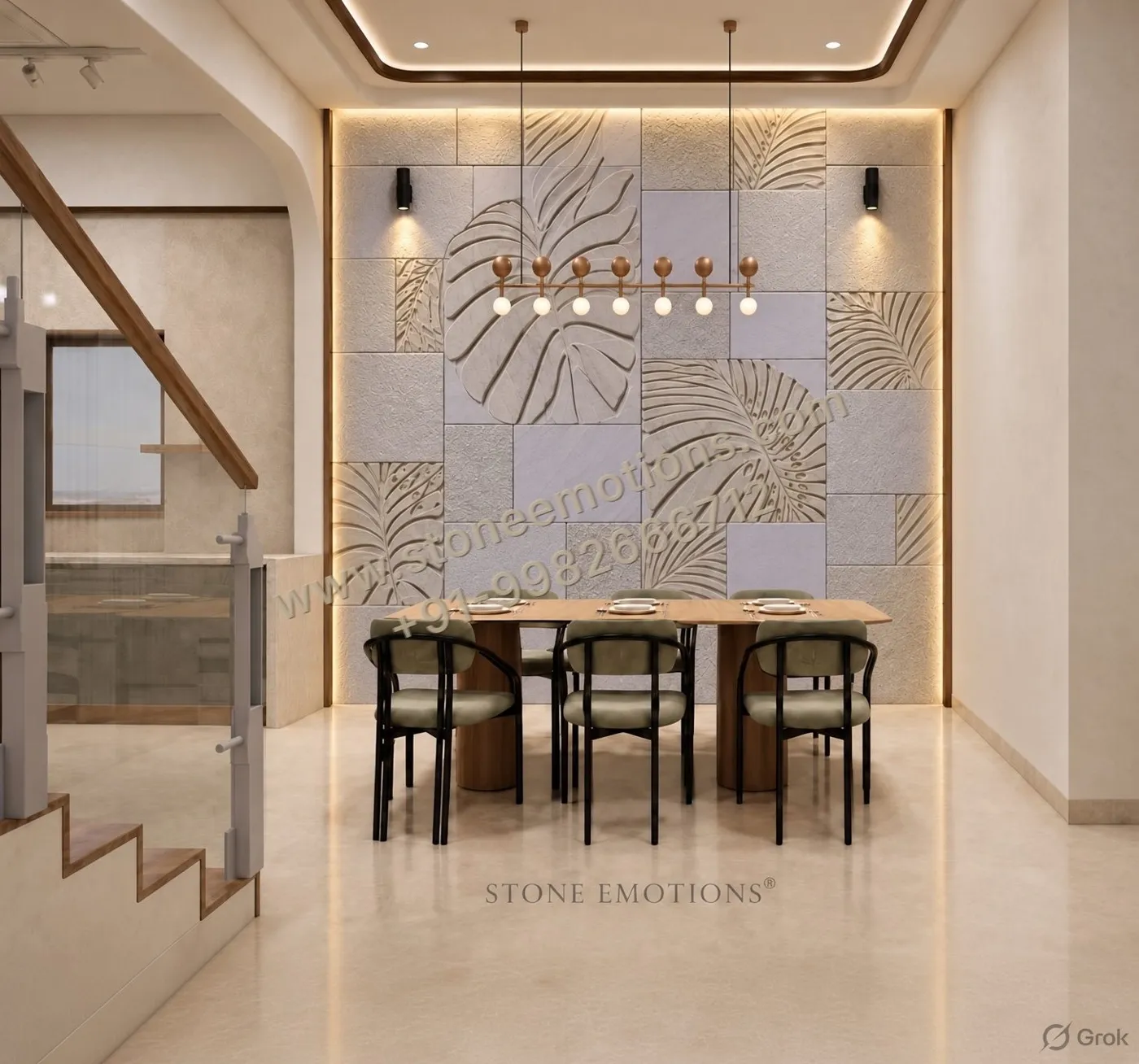
Dining walls suit compositions that look good from a seated eye level: monstera or ginkgo leaves, circular medallions, and backlit lotus forms that double as ambient light.
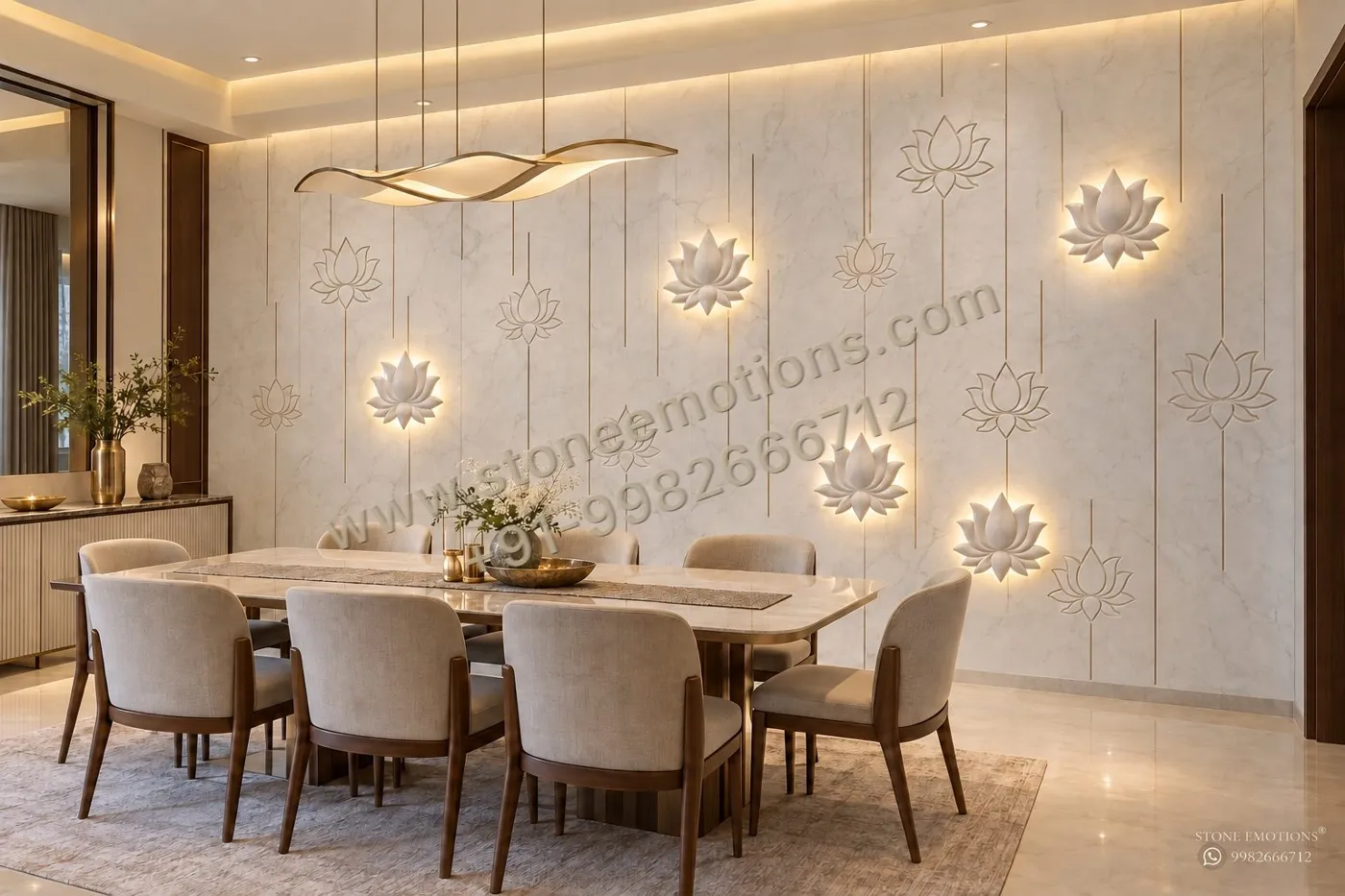
Matching the design to the room
| Room | Typical viewing | Suits | Relief |
|---|---|---|---|
| Bedroom | Close, soft light | Waves, mandalas, geometric, warm tones | Low to medium |
| Living room | Across the room | Figurative, botanical, veined slabs | Medium to deep |
| Dining | Seated, mid-distance | Leaves, medallions, backlit forms | Low to medium |
Practical points
- Furniture first: position the bed, sofa or table on the drawing so the design centres correctly.
- Switches and sockets: decide whether they sit in the stone and plan cut-outs within single panels.
- TV walls: keep the TV zone flatter and plan fixings and cable routes.
- Lighting: cove or wall-washer light shows relief; avoid strong downlights directly in front.
- Touch and dust: very deep relief behind a bed collects dust; medium relief is easier to live with.
Colour, light and mood
Stone colour shapes the mood of a room as much as the motif. Ivory and white stones reflect light and make a bedroom feel airy; they show relief clearly under warm cove light. Mint and grey tones feel cooler and pair well with wood and brass. Teak- and brown-banded sandstones feel warm and enveloping, suiting larger bedrooms and lounges. Charcoal stones create drama and are best used where there is enough light, or as a contrast panel within a lighter wall.
Light temperature matters: warm white light (around 2700–3000 K) flatters most sandstones, while slightly cooler light can suit white marble [indicative only]. Dimmable cove or wall-washer lighting lets one wall feel bright and crisp in the day and soft at night. Avoid a row of downlights close to the wall that creates scalloped hot spots across the carving.
Combining stone with other materials
Stone feature walls rarely stand alone. In bedrooms, an upholstered headboard can sit in front of a carved stone field, with the carving visible above and around it — plan the headboard height so it does not cut a motif in half. In living rooms, wooden shelving, a fireplace or a TV console can frame the stone; keep enough plain stone around the main motif so it does not feel crowded. Metal inlay strips, brass edging or backlit glass can add a contemporary touch. Decide these combinations at design stage so joints, fixings and cable routes are coordinated.
Whatever the combination, approve a physical sample of the stone and finish next to the actual wood, fabric or metal you plan to use, because natural stone colour reads differently against different materials.
What to send for a feature wall
To get useful design suggestions quickly, send the room type, wall width and height, a straight-on photograph of the wall, the position of the bed, sofa or TV, and the colours of the floor and furniture. Add one or two design codes from our pages that you like. This is usually enough to suggest a direction, scale the motif and recommend a stone and finish to sample.
Stone choices in brief
Ivory and white sandstones give a soft, matt, shadow-friendly surface; mint and grey sandstones are cooler; wood-toned sandstones are warmer. White marble feels brighter and more formal. Compare options on the materials page and in sandstone vs marble.
Explore: Bedroom walls Living room walls Dining room walls Mandala bedroom design