
The most popular stone mandir backdrop ideas are built around one sacred motif — Om, lotus, a peacock feather, a mandala, the sun with a cow, or a deity-related symbol — set on a calm stone field behind the idol. Choose the motif first, then decide whether it is carved, engraved or inlaid, and plan the niche, shelf and lighting around it.
How to use this page
This is an ideas page: it groups mandir backdrop designs by motif so you can quickly see what direction suits your pooja room. If you are at the planning stage — measuring, sequencing and preparing an enquiry — read planning a stone mandir backdrop first. Every image here is a design visualisation, not a photograph of an installed mandir, and every design can be redrawn to your wall.
Om and lotus backdrops
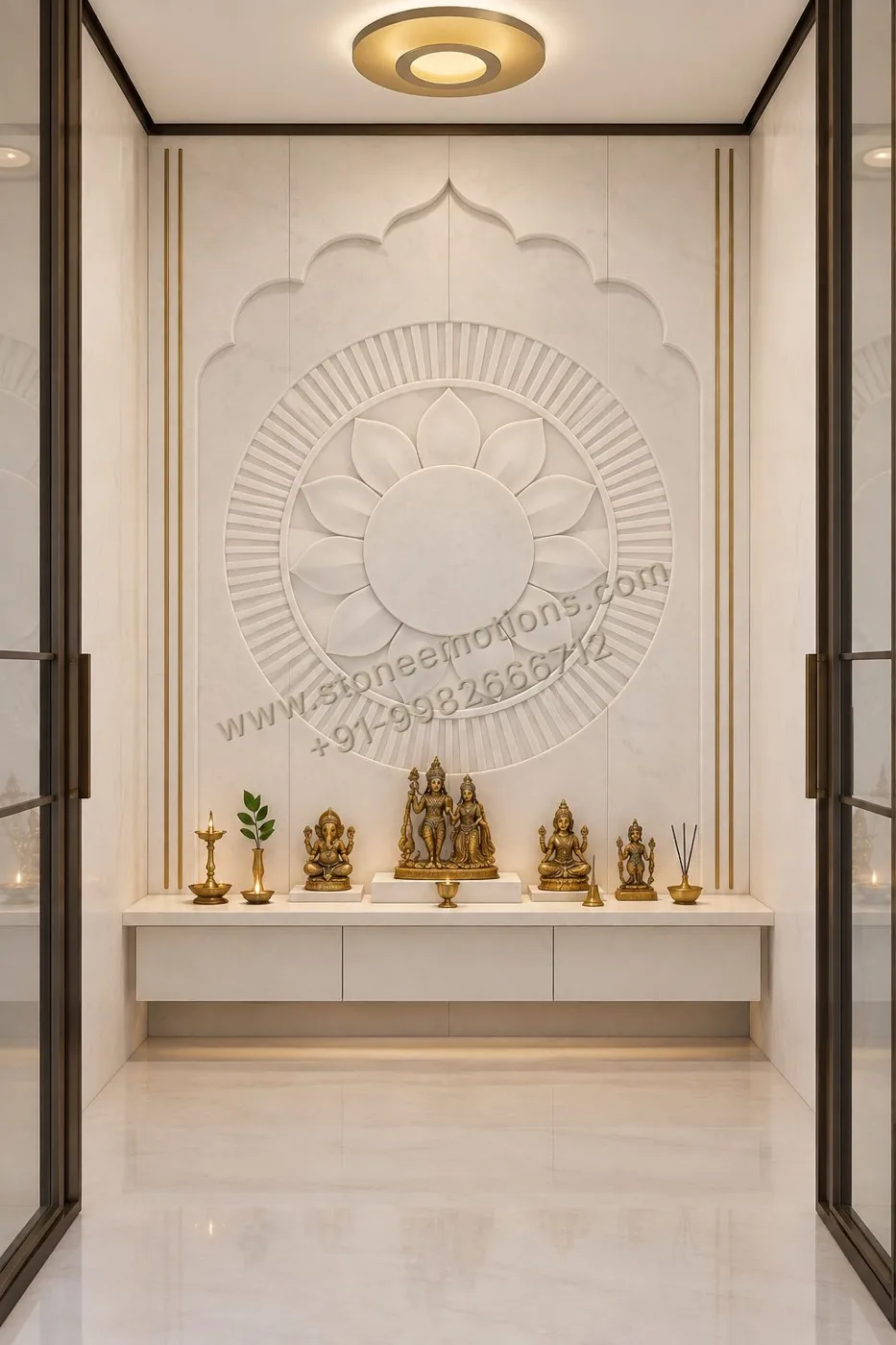
Om and lotus are the most universal choices: they suit almost any tradition and any home. The calmest versions use one carved Om, often inside a circle or mandala, with a lotus below or above and plenty of plain stone around. This keeps the idol as the visual focus. Engraved line versions are quieter still; deeper relief versions read from across a room.
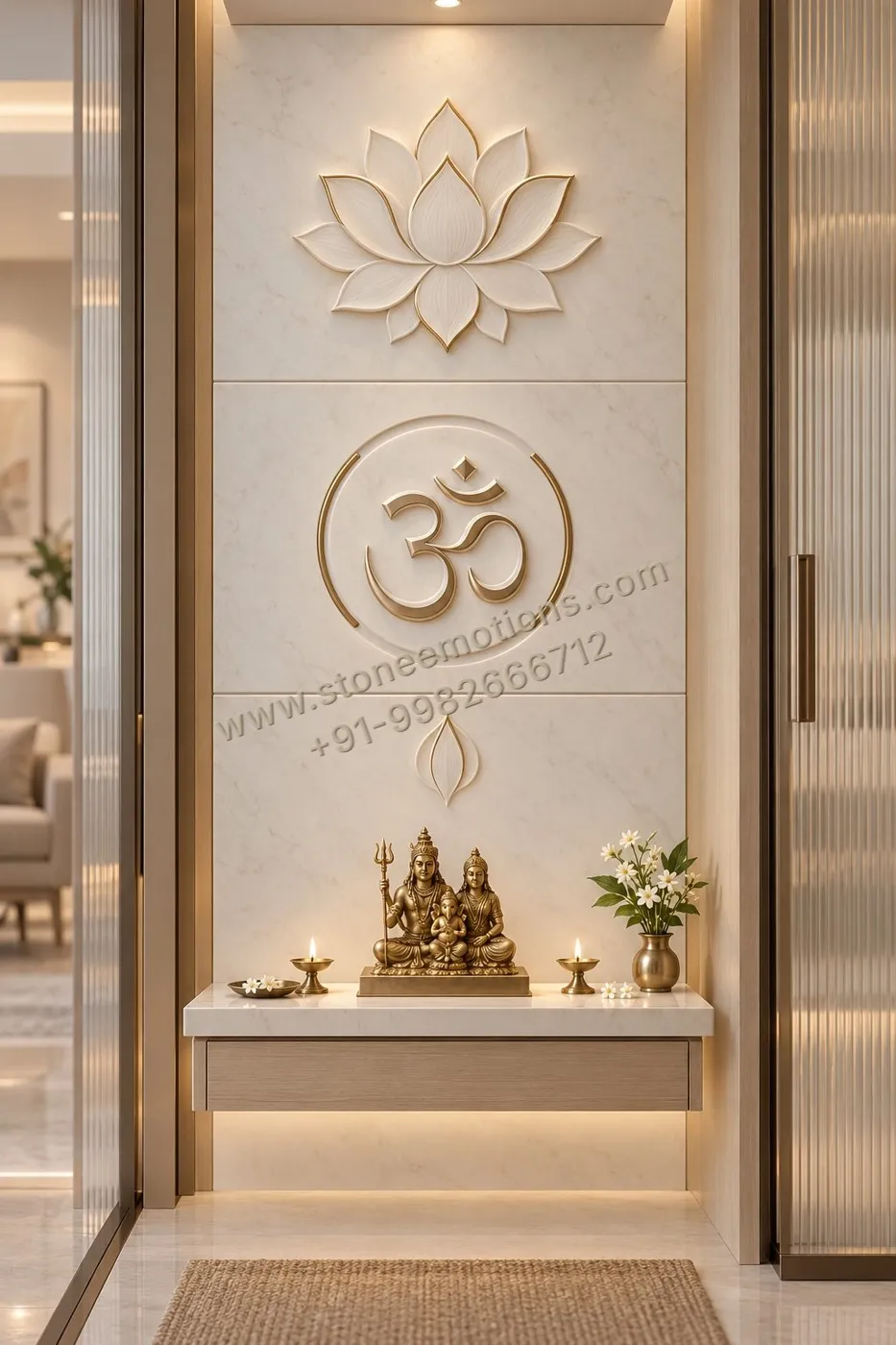
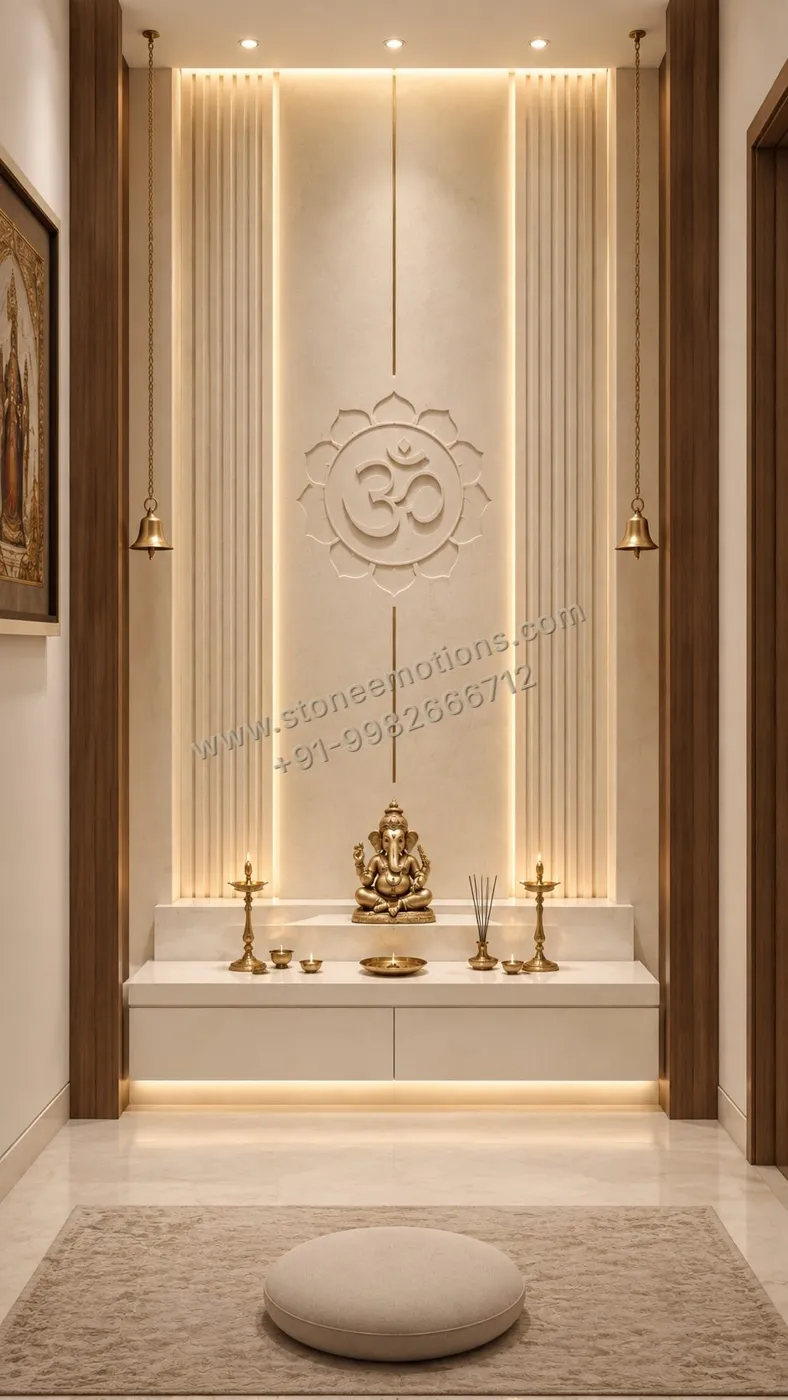
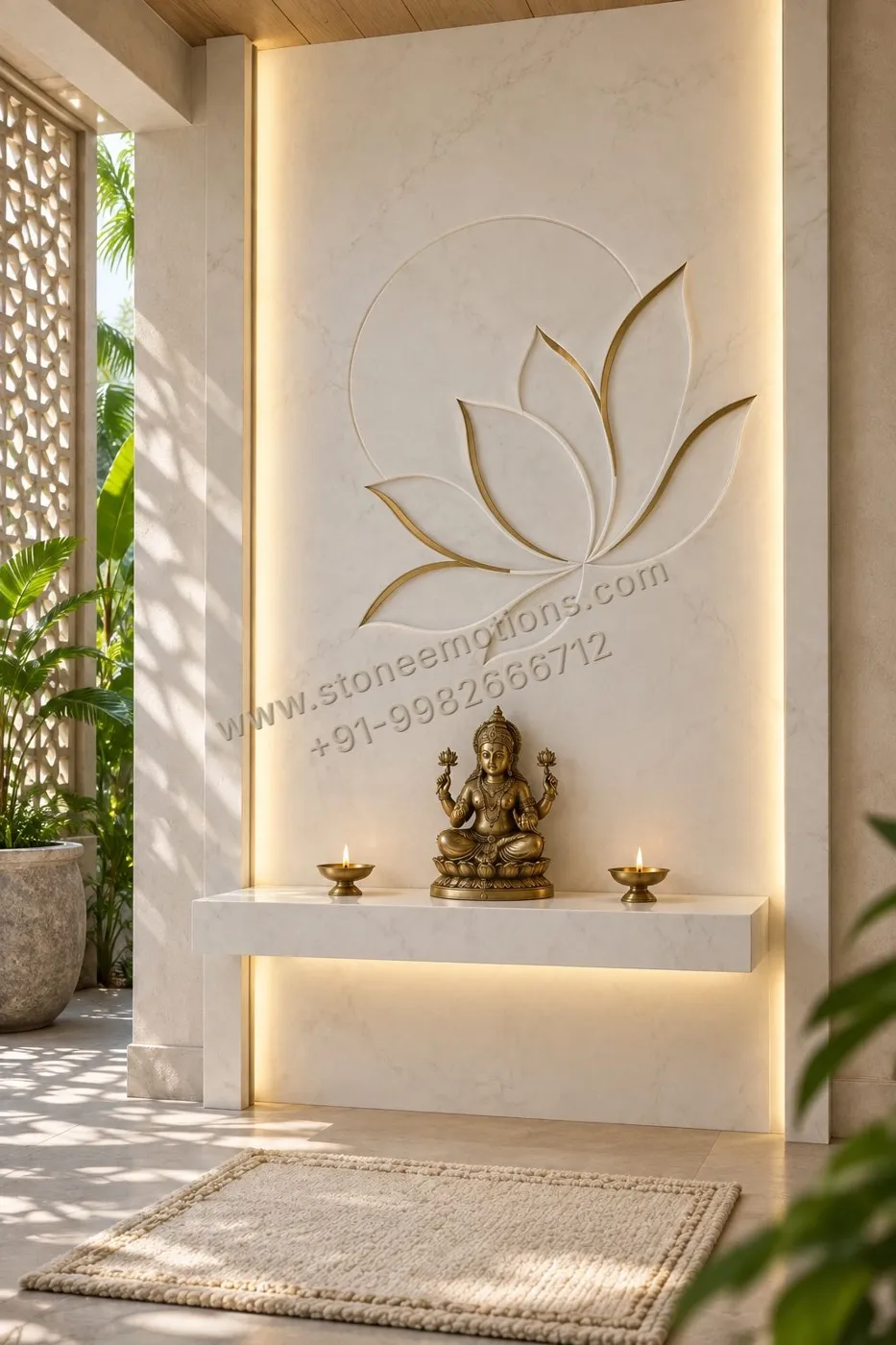
Lotus motifs work as a single large flower, a row of buds along the top, or thin stems rising behind the idol. White sandstone and white marble are the classic pairing for a serene look.
Peacock feather backdrops
The peacock feather is closely associated with Krishna, which makes it a natural choice behind a Krishna idol. Designs range from a white carved fan of feathers inside an arch to colourful inlaid feathers in blue and green set into white stone. Arched frames echo the shape of a temple niche and help the backdrop feel like a shrine rather than a wall.
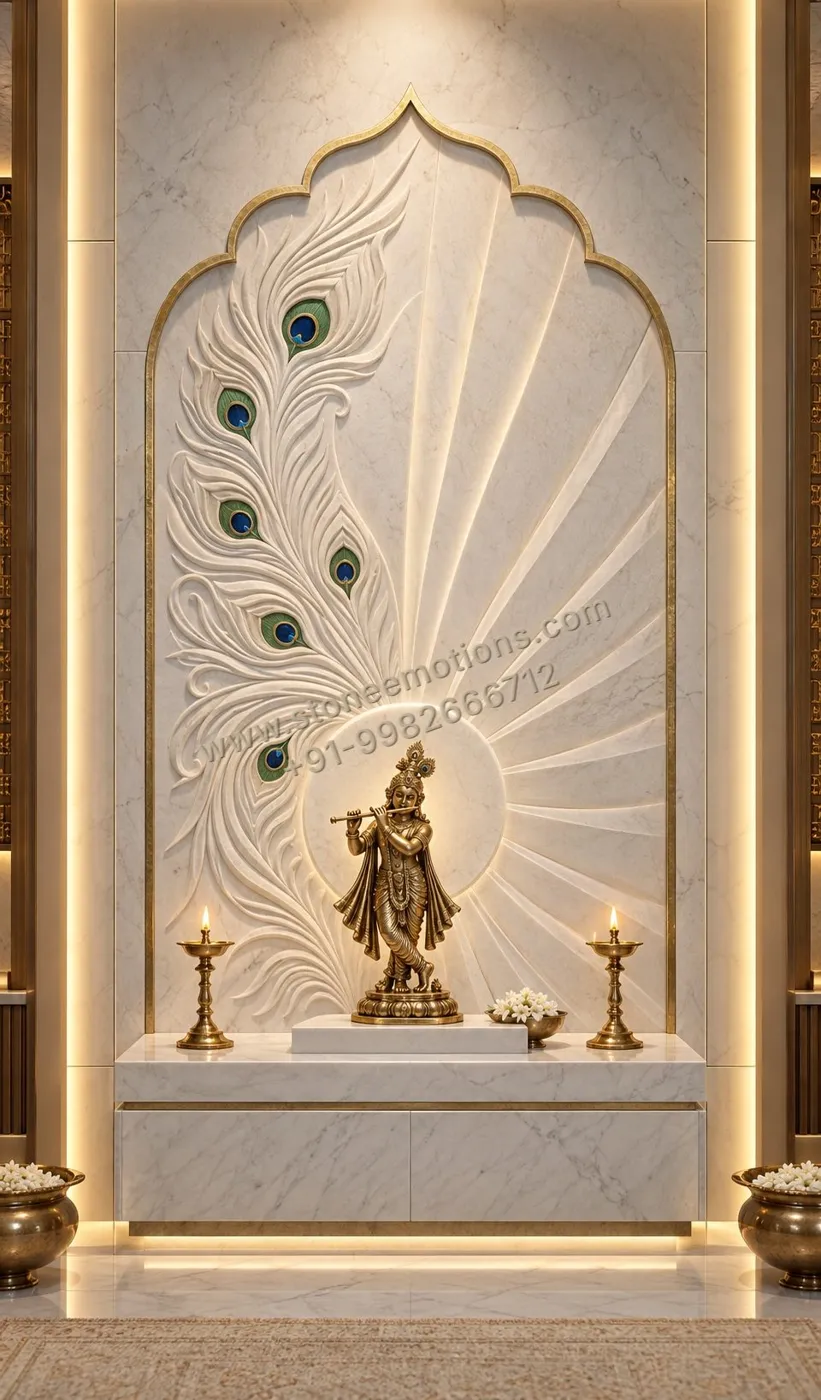
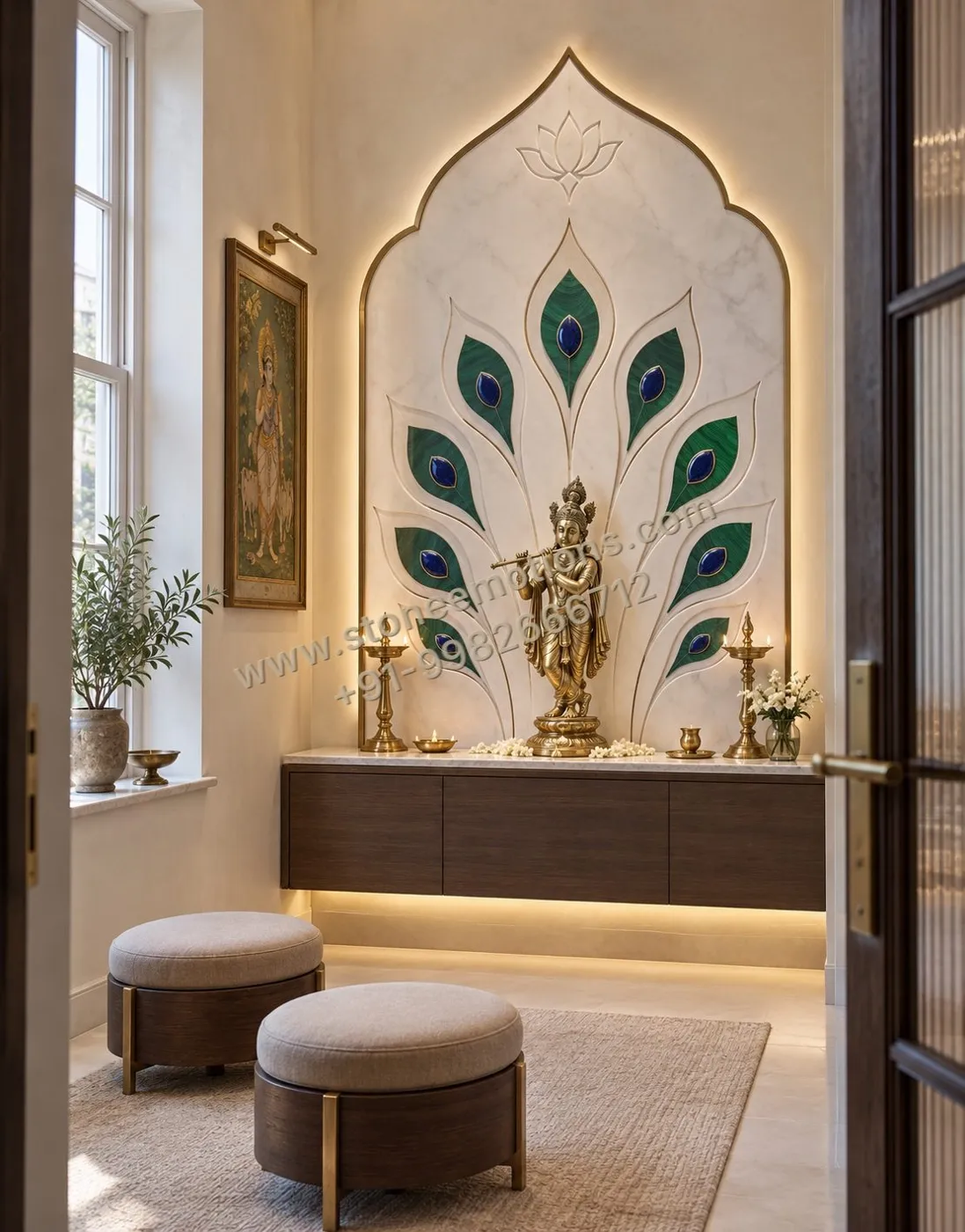
Inlay versions need careful material selection so the colours stay true and the pieces sit flush; carved versions rely on light to show the feather detail. See all peacock designs on peacock feather stone designs.
Ganesh and texture backdrops
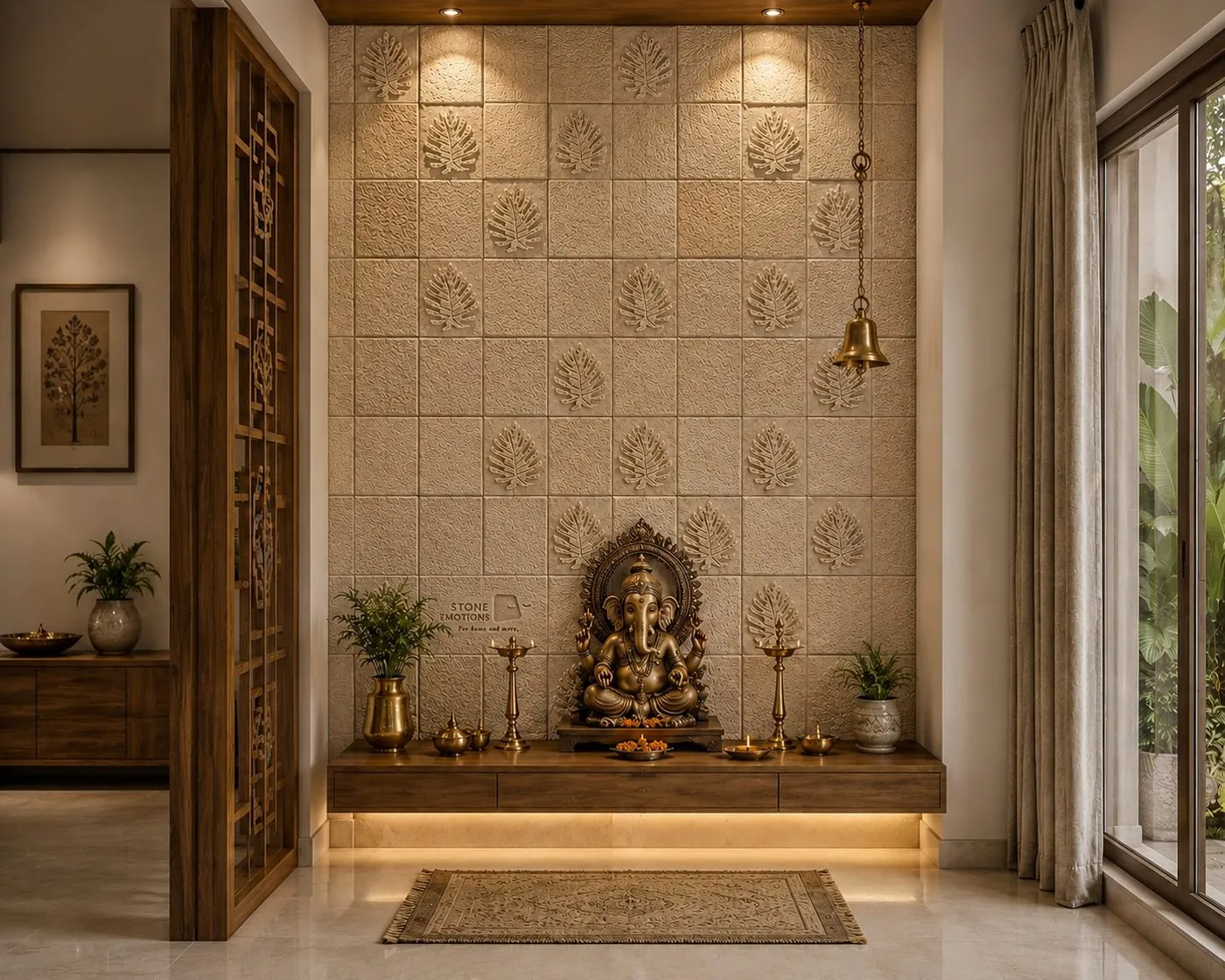
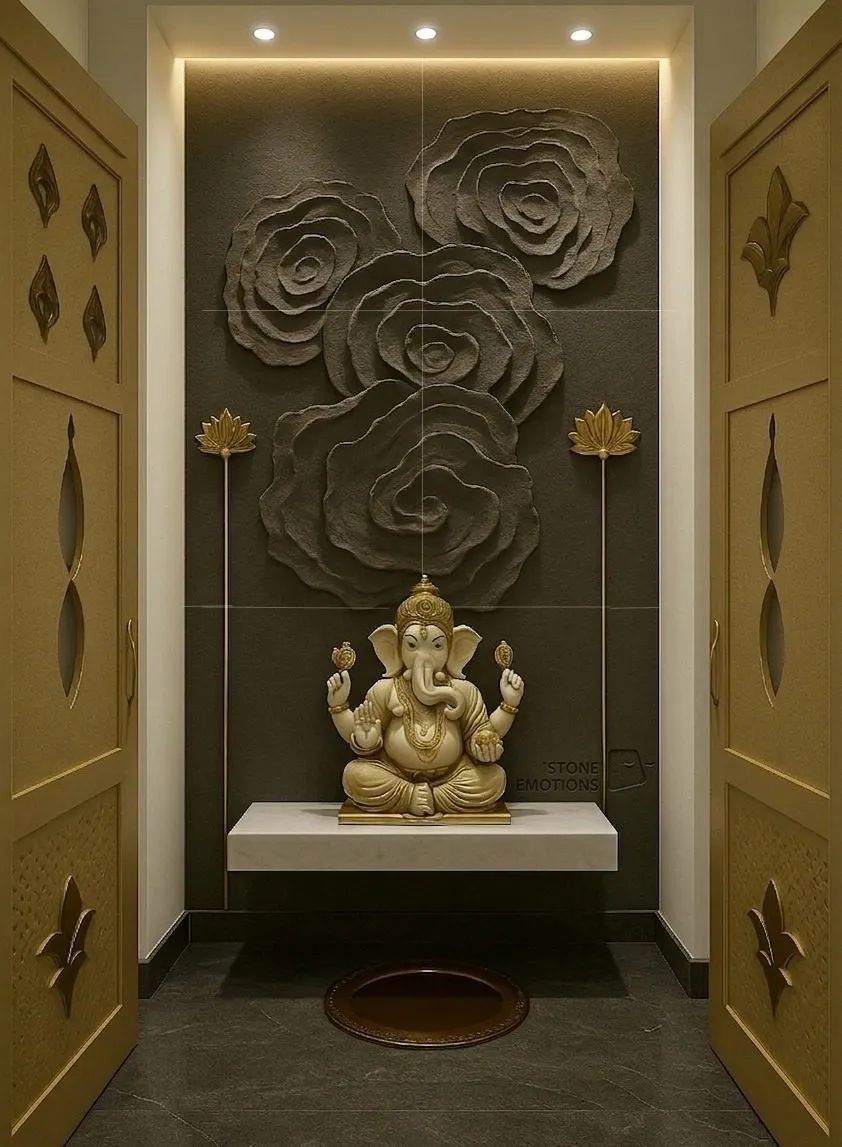
For a Ganesh idol, many families prefer the backdrop to be quiet and textural so the murti stands out. Fine wave or rhythm textures, mandala tiles and small repeated motifs work well, sometimes with a single carved medallion above. Darker stones with a carved floral relief create a more dramatic, temple-like setting.
Sun, cow and narrative motifs
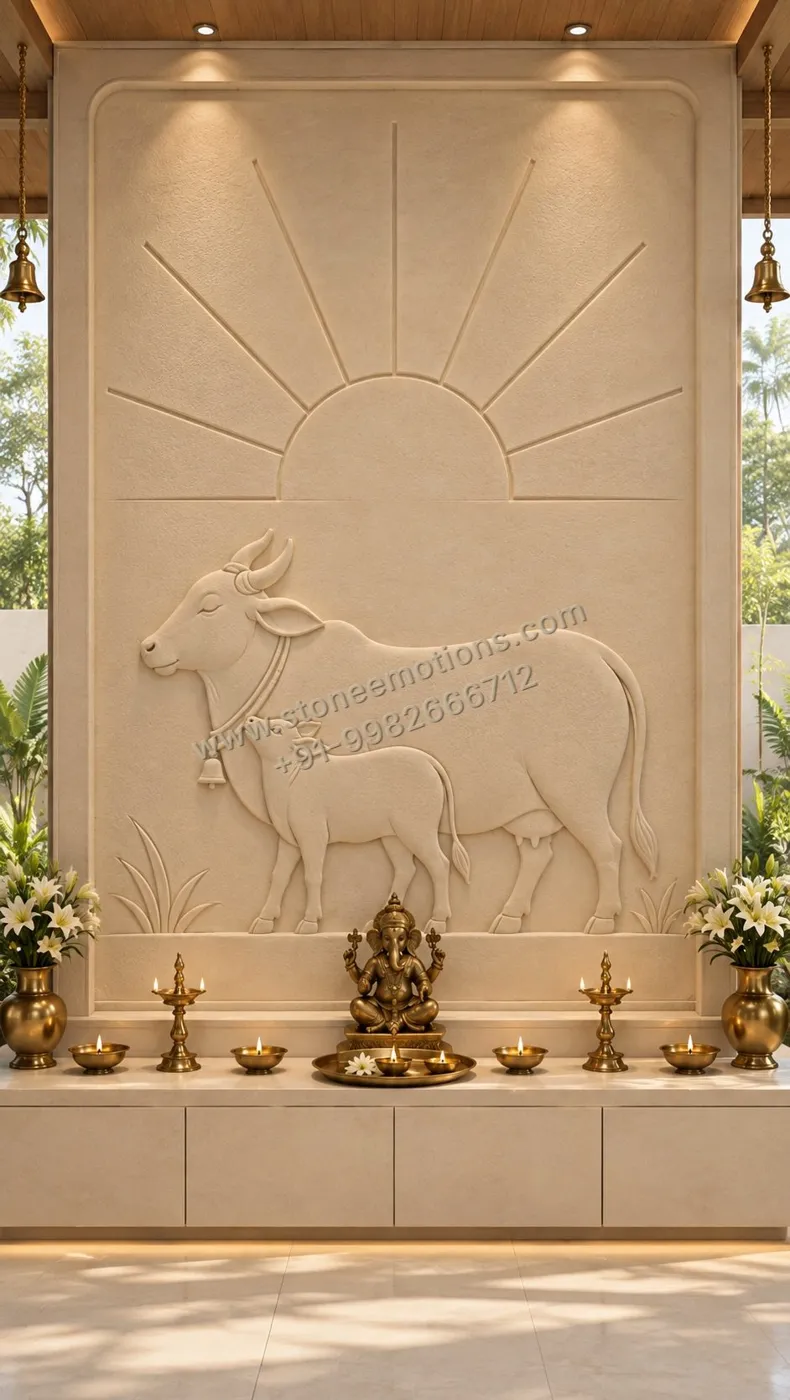
Sunburst rays with a cow — associated with Krishna’s childhood and with prosperity — make a warm, narrative backdrop. Pichwai-inspired compositions with trees, cows and lotus ponds are richer and suit larger walls. Because these designs are more detailed, they benefit from a simple shelf and restrained lighting so the composition does not feel busy.
Arches and mandalas
A carved arch outline, sometimes with a faint mandala inside, defines the sacred space even before a motif is added. It is a good choice when the mandir is in an open living area and needs to feel distinct. Combine with a floating shelf and concealed light along the arch for a soft glow.
Carved, engraved or inlaid?
| Approach | Look | Suits | Consider |
|---|---|---|---|
| Engraved line | Subtle, minimal | Small pooja rooms, modern homes | Needs side light to show |
| Carved relief | Shadowed, timeless | Om, lotus, feathers, mandalas | Plan the light direction |
| 3D carving | Sculptural, dramatic | Larger walls, statement mandirs | Keep the idol area calmer |
| Inlay | Colourful, jewel-like | Peacock feathers, florals | Material selection and colour approval |
Stone and finish in brief
White and ivory sandstones give a soft matt surface that shows carving clearly; white marbles feel brighter and take fine detail and polish. Diya smoke and oil can mark porous stone over time, so the area directly behind a lamp is often kept smooth and easy to wipe, and some stones may benefit from a suitable sealer — decided per stone. Our natural stone materials page goes deeper into the stone choice.
Ideas for different room sizes
A niche in a living room. When the mandir is a recess in a living or dining wall, a single framed panel with an Om, lotus or feather motif keeps it distinct without dominating the room. Concealed light inside the niche makes it glow in the evening.
A dedicated pooja room. With a full wall available, a central arch or medallion behind the idol can be extended with quieter side panels, a carved toran along the top, or textured stone on the flanking walls. Keep the floor-level area practical for lamps, flowers and cleaning.
A double-height or entrance mandir. Larger walls can carry a narrative composition — a tree with cows, a temple skyline or a full peacock — with the idol placed at a comfortable height for prayer. The design must still give the idol a clear calm space; scale the motif so it frames rather than competes with the murti.
Small details that make a big difference
A few details lift a stone mandir from good to beautiful. A slim stone shelf with a softly rounded edge feels more refined than a thick square slab. A shallow recess for a diya, finished smooth, keeps oil and soot away from carved areas. Concealed light should be hidden from the seated eye level so you see the glow, not the strip. Bells, torans and hooks for garlands are easier to fix if their positions are planned before the stone is installed. And a plain stone border between the backdrop and the surrounding wall finish gives a clean, deliberate edge.
Fitting the design to your pooja room
- Measure the wall and note the idol height, shelf height and door position.
- Choose one main motif and keep the rest of the wall quieter.
- Decide on niche depth and whether the shelf is stone.
- Plan lighting — concealed cove, backlit outline or small spots — before the stone is made.
- Approve a physical stone sample and, for carved work, a sample of the detail.
Explore: Mandir & sacred walls AARADHYA mandir backdrops Temple backdrops Lotus and Om design Planning a mandir backdrop